Alec Newald Alien Abduction: New Zealand’s Ten Missing Days
Alec Newald’s alien abduction story begins with something ordinary: a drive across New Zealand.
He said he left Rotorua for Auckland in February 1989.
The trip should have taken only a few hours.
According to Newald, it became ten missing days.
When he returned, he claimed he had memories of a craft, nonhuman beings, telepathic contact, and a world called Haven.
That is why the Alec Newald alien abduction account still circulates in UFO circles.
It is not just a missing-time story.
It is a full cosmic history, with ancient beings, genetic experiments, hidden knowledge, and a warning about humanity’s direction.
The Drive from Rotorua to Auckland
Newald described the trip as routine at first.
Rotorua to Auckland is a familiar North Island route.
There was no reason to expect anything unusual.
Then, in his account, the road changed.
He later said he became surrounded by a strange blue light.
The car seemed to lose its normal relationship with the road.
Time stopped behaving like time.
When the experience was over, Newald said ten days had passed.
He had not simply arrived late.
He had returned with an entirely different story about where he had been.

The Missing Ten Days
The missing days are the spine of the Newald story.
Without them, the case would be another strange drive, another moment of confusion, another private memory.
With them, the story becomes much larger.
Newald said he came back unsettled and physically affected.
He described headaches, disorientation, and a feeling that his normal life had been interrupted.
He also said his car drew attention after the incident.
In his telling, people showed up asking questions.
Some seemed especially interested in the vehicle.
That detail helped push the story from personal encounter into the territory of secrecy and surveillance.
CoEvolution: The Book That Made the Story Public
Newald eventually wrote about the experience in CoEvolution.
The book is the main source for the details most people associate with his case.
In it, Newald describes being taken aboard an advanced craft.
He calls it a lightship.
He also describes beings who communicated in ways that felt more like direct knowing than ordinary speech.
Colors mattered.
Sound mattered.
Musical tones mattered.
In Newald’s account, language was not limited to words.
The Beings on the Lightship
Newald said the beings first appeared almost ghostlike.
Later, he described them in more physical terms.
They had large eyes.
Their skin seemed smooth and unusual.
They did not feel human, but they were not presented as monsters.
The tone of the story is closer to contact than attack.
Newald’s beings explain, guide, and reveal.
They are mysterious, but not random.
They seem to know him.
They seem to have chosen him for a reason.
Millie, Zeena, and Telepathic Contact
Two names stand out in Newald’s account: Millie and Zeena.
Millie is often described as one of the first beings he encountered.
Zeena becomes more central as the story unfolds.
Through Zeena, Newald said he learned about human origins, ancient history, and the planet Haven.
The communication was telepathic.
Newald described it as layered, almost musical.
Ideas arrived with feeling, color, and tone.
That makes his story different from abduction accounts built around fear, silence, and medical examination.
This one reads more like a guided initiation.
The Number Twelve
One small detail gives the story a strange texture.
Newald said the beings used a number system based on twelve.
That may sound minor, but it matters inside the story.
It suggests a culture with its own structure.
Its own way of organizing thought.
Its own mathematics.
In contact stories, these little details often do a lot of work.
They make the world feel lived-in.
They give the account an internal logic.
The Planet Haven
The most memorable destination in the Alec Newald abduction story is Haven.
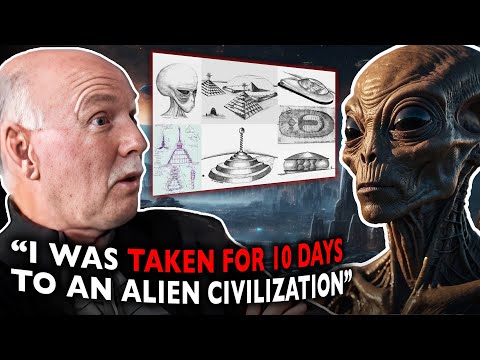
Newald described Haven as a small, highly ordered world.
Its buildings were not random.
He described circular forms, pyramid-like structures, and carefully arranged cities.
The planet was said to be governed by a High Council of nine members.
Haven was not presented as a fantasy paradise.
It was a survival world.
According to the story, its people had endured disaster, migration, and rebuilding across more than one planet.
Khyber, Mars, Earth, and Haven
Newald’s account connects Haven to a longer history.
He said the beings once lived on a world called Khyber.
After Khyber was destroyed, survivors moved through other worlds.
Mars appears in that migration story.
Earth appears too.
Eventually, the survivors settled on Haven.
This gives the account its ancient-astronaut flavor.
Humanity is not isolated.
Earth is not the beginning of the story.
We are part of a wider family drama playing out across planets.
The Suit That Fed Him
Newald also described wearing a special suit during the experience.
The suit was not just clothing.
It supported the body.
He said it provided nourishment and removed the need for ordinary eating or waste.
That detail gives the lightship scenes a practical edge.
The beings were not simply mystical.
They had technology.
They had systems.
They had a way to keep a human alive in an environment far outside normal life.
The Elders and Human Origins
One of the biggest claims in CoEvolution concerns the Elders.
Newald said these ancient beings were involved in the development of humanity.
In his account, human beings were shaped through genetic work connected to Earth’s living creatures.
That idea places the story beside other ancient alien narratives.
It suggests that human history is deeper, stranger, and more engineered than we usually imagine.
Newald’s version also includes interference by a darker force.
That force, he said, altered the human path.
Fear, conflict, and limitation became part of the human condition.
Egypt and the Hidden Blueprints
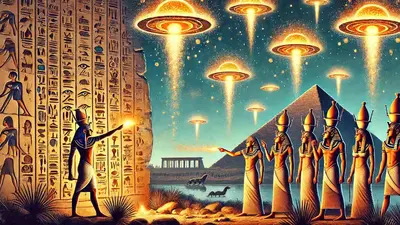
Newald’s story also points toward ancient Egypt.
He said Zeena told him that ship blueprints had been left somewhere in the Egyptian desert.
That is a classic UFO-history ingredient.
Egypt becomes a memory vault.
The desert becomes a hiding place.
Ancient monuments become hints of a forgotten contact age.
For readers who enjoy ancient astronauts, this is one of the most compelling parts of the Newald account.
Returning to Earth
Newald said returning was not simple.
The missing days were over, but the pressure had only begun.
He described strange visitors, questions, and a feeling of being watched.
He believed certain people wanted to know what happened to him.
He also believed some did not want the story shared.
Those claims became part of the atmosphere around the case.
The abduction was one mystery.
The aftermath became another.
Why the Story Still Pulls People In
The Alec Newald story has a different mood from many alien abduction cases.
It is not only about fear.
It is about explanation.
Newald’s account tries to answer enormous questions.
Where did humans come from?
Why are we so divided?
Are other civilizations watching us?
Did ancient beings leave traces behind?
That ambition is what keeps the story alive.
It gives readers more than a scary encounter.
It gives them a whole hidden history to think about.
The Place of Alec Newald in UFO Lore
Newald is not as widely known as Betty and Barney Hill, Travis Walton, or Whitley Strieber.
But his story has a loyal audience.
It sits in a particular corner of UFO culture.
Part abduction.
Part contactee story.
Part ancient alien mythology.
Part warning about human civilization.
That blend makes it memorable.
The case feels less like a single event and more like a doorway into an alternate history of Earth.
Final Thoughts
The Alec Newald alien abduction story remains one of New Zealand’s strangest UFO accounts.
It begins with a missing stretch of road between Rotorua and Auckland.
It expands into a lightship, telepathic beings, the planet Haven, ancient migrations, and hidden knowledge in Egypt.
Whether readers approach it as testimony, mythology, or cosmic speculation, the story has staying power.
It is intimate enough to feel personal.
It is big enough to feel galactic.
And like the best UFO stories, it leaves the door open just wide enough for the imagination to walk through.
Recommended