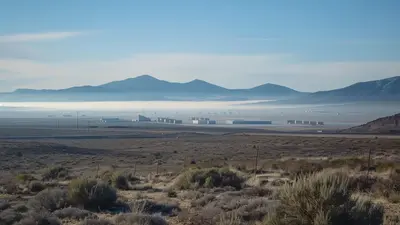
The Allagash Abduction: Maine’s Famous UFO Encounter
The Night the Allagash Went Strange
The Allagash abduction story begins in the kind of place where the sky feels bigger than the earth.
In August 1976, four friends entered the Allagash Wilderness Waterway in northern Maine for a canoeing, camping, fishing, and painting trip.
They were Jim Weiner, Jack Weiner, Charlie Foltz, and Chuck Rak.
The men knew one another through the Massachusetts College of Art. They were young, outdoorsy, creative, and comfortable enough with the wilderness to disappear into it for days.
Then, on Eagle Lake, they saw a light that changed their lives.
The Allagash abduction is now one of the most famous multiple-witness alien abduction cases in American UFO history.
It has everything that makes a case stick: remote woods, dark water, a brilliant object, missing time, shared memory, hypnosis, drawings, television coverage, and a later dispute between the witnesses.
That combination is why the story still has a pull nearly fifty years later.
Where Did the Allagash Abduction Happen?
The case is tied to Eagle Lake, part of the Allagash Wilderness Waterway in northern Maine.
This is not a crowded vacation lake with porch lights and traffic nearby.
It is deep forest, cold water, big silence, and long stretches where a person can feel very far from the rest of the world.
The State of Maine describes Eagle Lake as the second-largest lake in the waterway. It is 124 feet deep and surrounded by islands, coves, marshes, wildlife, and thick forest.
That setting matters.
At night, distance is hard to judge over dark water. A light can look close, then far away. It can seem to hover. It can feel like it is following you.
For the Allagash Four, the lake became the stage for something much stranger than a normal camping trip.

The First UFO Sighting
The men later said the first odd sighting happened before the night-fishing encounter that made the case famous.
They noticed a strange light in the sky while traveling through the waterway.
It was bright. It was unusual. It did not behave like a normal campfire, aircraft light, or star.
At that point, the story was still simple.
Four friends saw something in the sky that they could not explain.
They kept moving.
That is one of the eerie parts of the case. The first sighting did not end the trip. It became a warning sign only later, after the events on Eagle Lake were folded into a larger story.
The Night-Fishing Trip on Eagle Lake
The central Allagash incident happened when the four men went onto Eagle Lake at night to fish.
Before leaving shore, they built a large fire at their campsite.
The fire was supposed to act like a beacon, helping them find their way back in the dark.
Out on the water, the strange light returned.
Accounts usually describe it as a bright glowing sphere or oval above the trees. Chuck Rak later described a very bright globe that shifted between white, red, and green.
One of the men reportedly flashed an SOS signal toward it with a flashlight.
That is when the atmosphere of the story changes.
The object seemed to respond.
It moved closer. A beam or tube of light was said to reach toward the canoe. The men paddled hard for shore.
The next clear part of the story places them back at camp.
The fire had burned down much lower than they expected.
That burned-down fire became one of the case’s most important details, because it suggested to the witnesses that more time had passed than they remembered.

The Missing Time
Missing time is one of the most powerful motifs in alien abduction stories.
A person remembers one moment, then the next, but something in between feels gone.
In the Allagash case, the missing-time idea came from the gap between what the men remembered on the lake and what they found when they returned to shore.
They had gone out to fish.
They saw the light.
They paddled back.
Then the campfire seemed too far gone.
That detail later became the hinge of the abduction account.
If the men had truly lost time, what happened during it?
Years later, hypnosis sessions would supply the answer that made Allagash famous.
The Abduction Memories Came Later
The alien abduction part of the story did not fully arrive during the camping trip itself.
It came years later.
Jim Weiner reportedly began having disturbing dreams after a head injury. The dreams involved strange beings, medical imagery, and a sense that something had happened in the past.
Those dreams pulled the old Eagle Lake sighting back into focus.
Eventually, the men connected with UFO investigator Raymond Fowler, who became the main researcher associated with the case.
A Portland Public Library archive summary notes that in 1988, because of nightmares connected to the event, the men sought treatment and described the story under hypnosis.
Fowler later presented the case in his 1993 book, The Allagash Abductions.
By then, the original UFO sighting had become a full alien encounter narrative.
What the Men Said Happened Aboard the Craft
Under hypnosis, the men described being taken from the canoe into a bright enclosed space.
They recalled small humanoid beings with large heads, long limbs, and dark eyes.
The beings allegedly separated them.
The men described medical-style examinations, a loss of control, and the feeling of being handled by intelligences that did not explain themselves.
They also made drawings.
That part helped the story travel.
The witnesses were artists. Their sketches gave the Allagash case a visual identity: thin beings, staring eyes, clinical rooms, and a bright craft connected to the dark water of Eagle Lake.
For many readers, the drawings are one of the reasons the case feels so vivid.
Why the Allagash Abduction Became Famous
Many abduction reports involve one person alone at night.
Allagash had four witnesses.
That made it stand out immediately.
The case also had a dramatic structure that was easy to remember: four art students, a wilderness canoe trip, a bright object, a beam of light, missing time, hypnosis, alien beings, and matching sketches.
It sounded like a movie, but the men insisted it came from their lives.
Media attention followed.
Raymond Fowler’s book gave the case a serious UFO-research frame. Television appearances gave it a much larger audience. An Unsolved Mysteries segment helped make Allagash one of the classic abduction stories of the late twentieth century.
That is why people still search for it today.
The story is not just about a UFO. It is about what happens when four friends carry the same strange night into adulthood.
Chuck Rak’s 2016 Reversal
The Allagash story became more complicated in 2016.
Chuck Rak, one of the four witnesses, told The County that the abduction did not happen.
He did not take back the UFO sighting.
In fact, Rak still said the group saw a strange craft or bright object during the trip. He described the light as vivid, colorful, and unlike anything he could explain from the lake.
What he rejected was the later abduction account.
Rak said he had gone along with the story partly because he thought money might come from it. He also said his own hypnosis session did not produce the same detailed alien-examination memories promoted in the public version of the case.
The other men pushed back.
In part two of The County’s report, Charlie Foltz and Jim Weiner disputed Rak’s claims and defended the Eagle Lake account as they remembered it.
That split is now part of the case.
Allagash is no longer a perfectly unified four-witness story. It is a shared UFO sighting with a later disagreement over what happened after the light appeared.
Why the Fire Still Matters
The campfire is a small detail, but it carries a lot of weight.
The men said they left a strong fire burning when they went out on the lake. When they came back, it had burned down to coals.
To them, that suggested missing time.
To Rak, years later, the fire did not prove anything unusual. He argued that the wood could have burned down faster than the others believed.
That disagreement is important because the fire is one of the few physical details in the story.
There was no recovered object. No clear photograph. No piece of metal. No lake-bottom discovery.
The fire became a clock.
And like many clocks in UFO stories, people still argue over what it was really telling them.
Was the Light a UFO?
The word UFO means unidentified flying object.
By that standard, the Allagash light still fits the term as reported by the witnesses.
Even Rak, who later rejected the abduction story, continued to describe the original light as strange.
That is why the case is not easy to flatten into a simple yes-or-no answer.
The light over Eagle Lake is the strongest part of the story.
The abduction account is the part that depends most on later memory, hypnosis, interpretation, and trust between the witnesses.
For readers who love alien encounters, that tension is part of the fascination.
It leaves the case suspended between wilderness sighting, recovered memory, group experience, and UFO legend.
What Makes Allagash Different from Other Abduction Cases?
Allagash is often compared with the Betty and Barney Hill encounter, the Travis Walton case, and other famous abduction stories.
But it has its own flavor.
The setting is more isolated than most.
The witnesses were artists.
The story involved a group, not one driver on a lonely road.
The event unfolded on water, not a highway or bedroom.
And the later split among the witnesses gives the case an uneasy human edge.
That is what makes it feel real as a story, even when readers disagree about what happened.
It has friendship, fear, memory, ambition, resentment, belief, and the strange pressure of becoming famous for the most frightening night of your life.
The Allagash Abduction in UFO Culture
In UFO culture, Allagash became shorthand for a rare kind of case: a group abduction with shared imagery.
The case arrived at a time when alien abduction stories were becoming a major part of American paranormal culture.
By the 1980s and 1990s, hypnosis, missing time, medical examinations, grey-like beings, and recovered memories had become familiar features of the genre.
Allagash fit that pattern perfectly.
But it also brought something different: four men in a canoe, deep in Maine, watching a glowing object over the water.
That image is hard to forget.
It is why the case keeps returning in books, documentaries, podcasts, and online lists of famous alien abductions.
So What Happened at Allagash?
The cleanest version is this.
Four friends went into the Maine wilderness in 1976.
They saw a strange light over the water.
Years later, hypnosis sessions turned that sighting into a detailed alien abduction account.
Three of the men continued to defend the deeper story.
Chuck Rak later rejected the abduction while still maintaining that the UFO sighting happened.
That leaves Allagash in a strange place.
It is not just a campfire tale.
It is not just a neat alien-abduction case either.
It is a haunting mix of sighting, memory, belief, friendship, media, and myth.
Final Thoughts
The Allagash abduction endures because it begins with something simple and human.
Four friends went into the woods.
They looked up.
Something looked back.
Maybe the light over Eagle Lake was the whole event.
Maybe the later memories uncovered something deeper.
Maybe the truth sits somewhere between what happened, what was remembered, and what the story became after the world got hold of it.
That is why Allagash still works.
It feels like the wilderness itself: dark, quiet, beautiful, and impossible to see all the way through.

Recommended