Betty and Barney Hill Encounter: The UFO Abduction That Defined a Genre
The Betty and Barney Hill encounter is the alien abduction story that taught America the script.
A quiet road.
A strange light in the sky.
A craft that seemed to come closer.
Missing time.
Hypnosis.
Medical examinations.
A star map.
Before the Hill case, UFO stories were usually about sightings. After the Hill case, the alien abduction became its own kind of encounter.
That is why this case still matters.
It did not just become famous. It shaped the way people describe close encounters to this day.
Who Were Betty and Barney Hill?
Betty and Barney Hill lived in Portsmouth, New Hampshire.
Betty was a social worker.
Barney worked for the U.S. Postal Service and was active in civil rights work.
They were also an interracial couple in the early 1960s, which made them highly visible in a way many modern readers can easily miss.
Their story was never only about aliens.
It was also about two ordinary but serious people trying to explain a night that did not fit back into ordinary life.
That is one reason the case carried so much force.
The Hills were not presented as thrill seekers. They were a working couple driving home from vacation.
The Drive Home from Canada
The encounter began on the night of September 19, 1961.
Betty and Barney were driving home from a trip to Niagara Falls and Montreal.
Their dog, Delsey, was with them.
They were traveling south through New Hampshire on U.S. Route 3, moving through the White Mountains toward Portsmouth.
It was late.
The road was dark.
Then Betty noticed a bright object in the sky.
At first, it looked like a star or planet.
But it moved oddly.
It seemed to shift position, grow brighter, and follow a path that did not feel normal.

The Light Over Route 3
The Hills stopped more than once to watch the object.
They used binoculars.
Betty later described seeing a craft with lights.
Barney first tried to make sense of it as a conventional aircraft. Then the object seemed to descend and come closer.
Near Indian Head, Barney got out of the car for a closer look.
That moment became one of the most famous scenes in UFO history.
Through binoculars, Barney said he saw figures inside the craft.
He described them as humanoid, wearing dark uniforms, and watching him from windows.
Then fear took over.
Barney ran back to the car.
The Hills drove away.
The Beeping Sounds and Missing Time
After the close sighting, the story becomes stranger.
The Hills later described hearing a series of beeping or buzzing sounds.
They felt a strange sensation.
Their memories became broken.
The next clear part of the story placed them farther down the road than expected.
They eventually arrived home around dawn.
Something about the timing felt wrong.
Later interviews focused on the gap between where they remembered being and how long the trip appeared to have taken.
That gap became the famous “missing time” in the Hill case.
What Happened When They Got Home?
The Hills arrived in Portsmouth shaken and confused.
They later described several odd details.
Their watches had stopped.
Barney’s shoes were scuffed.
The binocular strap was damaged.
Betty’s dress was torn and later showed strange staining.
They also noticed circular marks on the trunk of their car.
Those details became part of the case’s lasting power.
The story was not only “we saw a UFO.”
It came with objects, sensations, and a feeling that something physical had happened.
The Air Force Report
Betty contacted Pease Air Force Base shortly after the encounter.
The incident entered the official UFO reporting system connected to Project Blue Book.
That matters because it places the sighting in the public record early, before the case became a book, movie, or abduction legend.
The original report centered on the UFO sighting.
The deeper abduction narrative came later.
That sequence is important.
First came the light, the road, the close approach, and the missing time.
Then came dreams, interviews, and hypnosis.
Betty’s Dreams
After the encounter, Betty began having vivid dreams.
In them, she and Barney were stopped, taken from the car, and brought aboard a craft.
She described beings, an examination, and a map of stars.
Betty wrote the dreams down.
Those dream notes became a key bridge between the original sighting and the later abduction story.
They also gave the case its emotional shape.
The Hills were not simply remembering a light.
They were trying to understand why the night kept returning in fragments.
NICAP and Walter Webb
The case also drew the attention of civilian UFO investigators.
Walter Webb, a Boston astronomer and member of NICAP, interviewed the Hills in October 1961.
NICAP stood for the National Investigations Committee on Aerial Phenomena.
At the time, it was one of the most serious UFO research groups in the United States.
Webb’s involvement gave the case an investigative frame.
He documented the sighting, the timeline, the object description, and the couple’s emotional state after the event.
That early attention helped keep the case from disappearing into private memory.
Dr. Benjamin Simon and Hypnosis
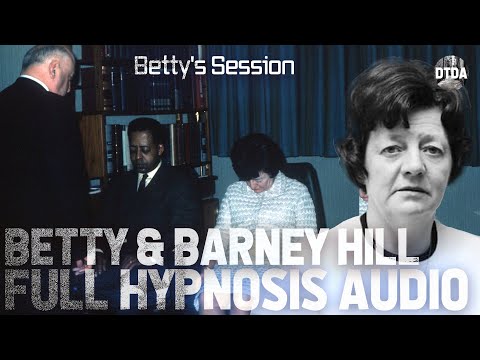
In the mid-1960s, Betty and Barney began hypnosis sessions with Dr. Benjamin Simon, a Boston psychiatrist.
The sessions were meant to explore the anxiety, dreams, and memory gap connected to the night drive.
Under hypnosis, both Hills described an abduction scenario.
They spoke of being taken aboard a craft.
They described beings with large eyes.
They described medical-style examinations.
Betty recalled a star map.
Barney recalled fear, control, and figures watching him.
These sessions became the heart of the public Hill story.
The Medical Examination Story
The examination scenes made the Hill case feel deeply personal.
Betty described being examined by beings aboard the craft.
One of the most famous details involved a needle-like procedure she was told related to pregnancy.
Barney’s recollections were more fearful and fragmented.
Together, their accounts created many of the motifs that later appeared again and again in alien abduction reports.
A controlled environment.
Telepathic communication.
Large-eyed beings.
Medical testing.
Missing time.
The Hill case did not invent every part of alien-abduction lore, but it organized the pieces in a way that became unforgettable.
The Star Map
Betty’s star map became one of the most debated parts of the encounter.
She said she had been shown a map aboard the craft.
Later, she drew it from memory.
In the late 1960s and early 1970s, amateur astronomer Marjorie Fish built a three-dimensional model of nearby stars and argued that Betty’s map resembled a view connected to Zeta Reticuli.
That claim gave the case a new identity.
The Hill encounter became known by some as the Zeta Reticuli incident.
The star-map debate still fascinates people because it gives the story a possible cosmic address.
Instead of “somewhere out there,” the mystery seemed to point toward a real star system.
The Interrupted Journey
The Hill story became a national phenomenon with John G. Fuller’s 1966 book The Interrupted Journey.
The book was based on the Hills’ account and Dr. Simon’s hypnosis sessions.
It brought the case to a much larger audience.
After that, Betty and Barney Hill were no longer just a couple with a strange private experience.
They were central figures in the modern UFO movement.
The story later inspired the 1975 television movie The UFO Incident, starring James Earl Jones as Barney and Estelle Parsons as Betty.
That film helped carry the case into popular culture.
Why This Case Became the Template
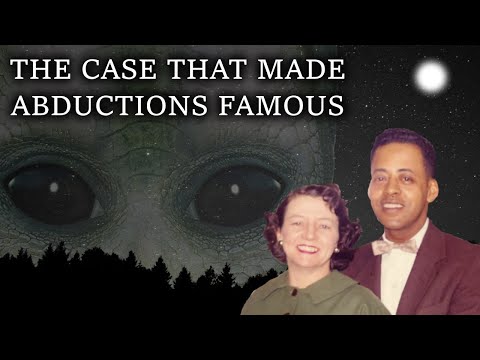
The Hill encounter became the template because it had everything.
A nighttime road trip.
A close UFO sighting.
Humanoid beings.
Missing time.
Physical aftermath.
Hypnosis sessions.
A star map.
A book.
A movie.
Most later abduction stories echo at least one of those elements.
That is why the Hill case is not only important as a reported encounter.
It is important as a cultural source code.
Betty Hill After Barney
Barney Hill died in 1969 at age 46.
Betty lived until 2004 and remained active in UFO circles for decades.
She gave interviews, spoke with researchers, and continued to defend the importance of the encounter.
For many people in the UFO community, Betty became a living link to the original abduction story.
Her notes, tapes, and related material eventually became part of archival collections connected with the University of New Hampshire, her alma mater.
That archival footprint is another reason the case continues to be studied.
The New Hampshire Historical Marker
In 2011, New Hampshire marked the Hill case with a historical highway marker near Lincoln.
The marker identifies the story as the first widely reported UFO abduction case in the United States.
That does not happen to every UFO story.
Most remain folklore.
The Hill encounter became part of state roadside history.
That tells you how far the case traveled from one dark drive through the White Mountains.
What Makes the Hill Encounter Different?
The case endures because it feels intimate.
It is not about anonymous lights over a city.
It is about a married couple alone in a car, trying to get home.
It is about fear, memory, love, and the feeling that a familiar road suddenly opened into something impossible.
It also carries the atmosphere of early-1960s America.
The Space Age was young.
UFOs were in newspapers.
The Cold War was in the background.
And an interracial couple from New Hampshire found themselves at the center of a story that would outlive both of them.
Final Thoughts
The Betty and Barney Hill encounter remains one of the most important alien abduction stories ever told.
It began with a light over Route 3.
It grew into missing time, hypnosis, star maps, and medical examinations aboard a craft.
It shaped books, television, UFO research, and thousands of later encounter reports.
Maybe that is why the case still works.
It feels like a road story, a love story, a fear story, and a cosmic mystery all at once.
Betty and Barney Hill drove into the White Mountains as two people heading home.
They came out as the couple who changed alien abduction history.
Recommended