Jeremy Corbell: UFO Filmmaker, Bob Lazar, Skinwalker Ranch, and UAP Leaks
Jeremy Corbell helped turn UFO footage into viral modern media.
He is a filmmaker, artist, podcast host, and public advocate for UAP disclosure.
His style is direct, intense, and built for the internet age.
Where older UFO researchers often worked through books, conferences, and local television, Corbell works through documentaries, podcasts, social clips, military leaks, and rapid public pressure.
That made him one of the most recognizable UFO figures of the 2020s.
It also made him one of the most debated.
For AlienINT readers, Corbell matters because his work brings together alien storytelling, witness advocacy, leaked UAP media, and the new disclosure movement.
Who Is Jeremy Corbell?
Jeremy Kenyon Lockyer Corbell is an American artist, filmmaker, martial artist, and UFO-focused media figure.
Before UFO documentaries, he was known for visual art and martial arts.
That background shaped his later work.
Corbell's films are not quiet academic case files.
They are built around mood, personality, mystery, confrontation, and belief.
His production banner, Extraordinary Beliefs, gives away the basic mission.
He looks for people who say they have brushed against a reality most people never see.
Then he tries to bring their stories to a mass audience.
Extraordinary Beliefs
Corbell's public brand grew through Extraordinary Beliefs.
The project focused on unusual claims, fringe science, alleged contact, secret technology, and hidden histories.
It gave Corbell a lane separate from traditional documentary journalism.
He was not presenting himself as a detached narrator.
He was presenting himself as someone pushing open a door.
That approach fits modern UFO culture.
The audience does not only want a report.
It wants access, urgency, and the feeling that a hidden story is breaking in real time.
Hunt for the Skinwalker
Corbell directed Hunt for the Skinwalker, a documentary tied to the famous Utah ranch.
Skinwalker Ranch is linked with UFO sightings, strange lights, animal mutilations, shadow figures, and other unusual reports.
The film drew from the book by George Knapp and Colm Kelleher.
It also connected Corbell with the Bigelow-world network of UFO researchers, insiders, and investigators.
That connection mattered.
Skinwalker Ranch was not just another paranormal location.
It became part of the story behind AAWSAP, government-funded UAP research, and the wider question of why officials took strange reports seriously.
Bob Lazar: Area 51 & Flying Saucers
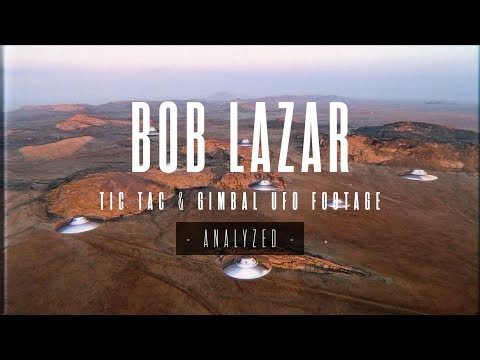
Corbell's biggest early UFO impact came through Bob Lazar: Area 51 & Flying Saucers.
The 2018 documentary reintroduced Bob Lazar to a generation raised on podcasts, streaming platforms, and YouTube clips.
Lazar's original story began in 1989 with George Knapp's Las Vegas reporting.
He claimed he had worked near Area 51 on recovered alien craft.
Corbell's film brought that story back into the center of UFO culture.
It also helped drive Lazar's later appearance with Corbell on The Joe Rogan Experience.
For many younger viewers, that podcast was their first serious encounter with the S-4 story, Element 115, and the idea of reverse-engineered alien technology in Nevada.
Why Corbell and Lazar Became Linked
Corbell did not discover Lazar.
George Knapp did the original television reporting decades earlier.
But Corbell revived the story at exactly the right moment.
The public was already rethinking UFOs after the Pentagon video era began.
Suddenly, Lazar's old claims about secret craft and hidden programs felt newly relevant to many viewers.
Corbell framed Lazar less as a relic of 1980s UFO television and more as a possible early witness to the disclosure story now unfolding.
That is why the documentary became so influential.
The USS Omaha Videos
Corbell became even more prominent after releasing U.S. military UAP material.
One major case involved the USS Omaha and other Navy incidents from 2019.
Corbell released footage and imagery described as showing objects near Navy vessels.
Some clips became famous for claims of objects moving through air and toward water.
The Pentagon later acknowledged that Navy personnel recorded certain released materials.
That gave the footage a different status from anonymous internet UFO clips.
It was part of the military UAP conversation.
The Pyramid UFO Video
Another Corbell release showed triangular or pyramid-shaped lights in night-vision footage.
The imagery spread quickly because it looked unlike ordinary aircraft footage.
It also sparked a major debate about camera effects.
Some analysts argued that the triangular shape came from bokeh, an optical effect caused by out-of-focus lights and the camera aperture.
That debate became a useful lesson for UFO watchers.
A clip can be real, filmed by real personnel, and still require careful interpretation.
Corbell's releases often live inside that tension.
The provenance may be interesting, while the meaning remains disputed.
The Jellyfish UAP
Corbell later released infrared footage of an object nicknamed the “Jellyfish UAP.”
The object appears as an irregular form moving across a military installation.
The nickname came from its strange shape.
Like many UAP clips, it raised more questions than it answered.
What was its distance?
How large was it?
How fast was it moving?
What did other sensors show?
Those questions are exactly why the clip became part of the disclosure debate.
The public saw enough to be curious, but not enough to close the case.
Weaponized with George Knapp
Corbell now co-hosts Weaponized with George Knapp.
The show combines interviews, UAP news, leaked material, insider claims, and commentary on government secrecy.
Knapp brings decades of UFO reporting.
Corbell brings speed, promotion, and a filmmaker's sense of drama.
Together, they have become a major pipeline for modern UAP stories.
The podcast also shows how UFO media has changed.
A case no longer needs to wait for a newspaper feature or cable documentary.
It can move from source to podcast to social media to congressional attention in days.
Why Corbell's Work Matters
Corbell matters because he keeps UAP stories moving.
He gives witnesses a platform.
He pressures officials to respond.
He turns obscure clips into public events.
He keeps older cases like Lazar and Skinwalker Ranch connected to newer stories about Navy encounters and whistleblowers.
That makes him valuable to the disclosure movement.
It also makes him a lightning rod.
He does not quietly file stories away.
He pushes them into the room and demands attention.
The Debate Around His Style
Corbell's style is not subtle.
He often frames UAP material with urgency, confidence, and cinematic language.
That is part of his appeal.
It is also why his releases are debated so intensely.
Some viewers want raw files, metadata, sensor details, and slower analysis.
Others want the story released before it disappears into classification systems.
Corbell usually stands with the second group.
He treats disclosure as a pressure campaign.
How to Read a Corbell Release
The best way to read a Corbell release is to separate three layers.
First, what does the image or video visibly show?
Second, what is known about where the file came from?
Third, what interpretation is being added by sources, witnesses, or commentary?
Those layers often get blended together online.
Keeping them separate makes the material easier to understand.
A short military clip can be fascinating even before anyone knows what the object is.
That is the strange power of Corbell's media work.
Jeremy Corbell's Lasting Influence
Jeremy Corbell helped make UFO disclosure feel immediate.
He brought Bob Lazar back into the mainstream.
He pushed Skinwalker Ranch to a streaming-era audience.
He released military UAP clips that forced public discussion.
He helped make Weaponized a hub for alien and UAP reporting.
And he showed how modern UFO culture now moves through film, podcasts, social media, and leaks.
Whether readers love his style or question it, Corbell is now part of the story.
In the current disclosure era, he is one of the people turning strange files into public pressure.
Recommended