Men in Black: UFO Witnesses, Secret Agents, and Alien Silence
The Men in Black are the shadow that follows the flying saucer.
A witness sees something impossible in the sky.
Then the visitors arrive.
They wear dark suits.
They ask strange questions.
They know details they should not know.
They warn the witness to stop talking.
That is the classic Men in Black story.
Long before Hollywood turned them into alien police, the Men in Black were one of the most unsettling legends in UFO history.
What Are the Men in Black?
In UFO lore, the Men in Black are mysterious figures who appear after a sighting or close encounter.
They usually arrive in twos or threes.
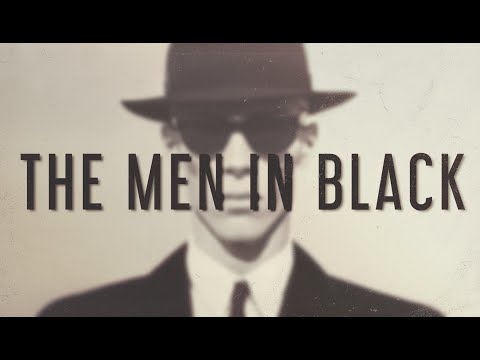
They wear dark suits, dark hats, and sometimes sunglasses.
They may drive an old black car that looks out of place for the time period.
Some speak like government agents.
Others behave like beings imitating humans badly.
Witnesses describe pale faces, stiff movements, odd voices, and a cold emotional presence.
The message is almost always the same.
Forget what you saw.
Do not tell anyone.
The Maury Island Warning
One early seed of the legend came from the 1947 Maury Island case in Washington state.
Harold Dahl claimed he saw strange objects near Puget Sound and later received a warning from a man in a black suit.
The man allegedly knew details about the sighting and told Dahl to stay silent.
The larger Maury Island story remains tangled in hoax claims, Air Force interest, and early flying-saucer confusion.
Still, the image stuck.
A witness sees a UFO.
A dark-suited stranger appears.
The silence begins.
Albert Bender and the International Flying Saucer Bureau
The Men in Black legend truly took shape with Albert K. Bender.
Bender founded the International Flying Saucer Bureau in 1952.
It was one of the first civilian UFO organizations of its kind.
He also published a newsletter called Space Review.
Then, in 1953, Bender suddenly shut everything down.
He hinted that he had been ordered to stop by a mysterious “higher source.”
That announcement electrified early UFO circles.
To many readers, it suggested someone had frightened him away from the truth.
The Three Visitors
Bender later described a terrifying encounter with three dark figures.
They were dressed in black.
They appeared in his room.
They communicated without speaking.
They told him the truth about UFOs and warned him not to reveal it.
Bender said the experience left him shaken and ill.
That story gave the Men in Black their supernatural edge.
They were not only officials with badges.
They seemed like something stranger wearing the costume of authority.
Gray Barker Made the Story Famous
Writer Gray Barker made the legend famous.
His 1956 book They Knew Too Much About Flying Saucers turned Bender's story into a UFO classic.
The title alone captured the mood of the era.
Someone knew too much.
Someone else wanted the secret buried.
Barker gathered stories of silenced researchers, strange visitors, and hidden saucer knowledge.
The book helped make the Men in Black a permanent part of UFO folklore.
The John Sherwood Hoax
The MIB story also has a playful and troubling side.
Writer John Sherwood later said he and Barker created a fictional Men in Black story that was published as if it were real.
That matters because UFO culture in the 1950s and 1960s often mixed investigation, rumor, satire, and promotion.
Some writers were sincere.
Some were entertainers.
Some were both.
The Men in Black grew in that strange atmosphere.
It was a world where a hoax could become folklore, and folklore could shape future testimony.
John Keel and the Uncanny Visitors
John Keel pushed the legend in an even stranger direction.
Keel, best known for The Mothman Prophecies, collected reports of odd visitors, phone calls, warnings, and impossible coincidences.
To Keel, the Men in Black did not feel like ordinary federal agents.
They felt like part of a broader phenomenon.
He connected them with UFOs, Mothman, psychic disturbances, and what he called ultraterrestrials.
That idea made the Men in Black more mysterious.
Maybe they were not government men hiding aliens.
Maybe they were part of the same non-human intelligence behind the sightings.
Why the Men in Black Feel So Alien
The best Men in Black stories do not describe normal intimidation.
They describe wrongness.
The visitors look human, but only almost.
They seem confused by food, speech, clothing, or ordinary social behavior.
They ask questions they should already know.
They use outdated phrases.
They make witnesses feel watched, studied, or handled.
That almost-human quality is what makes the legend so powerful.
It turns a government cover-up story into an alien disguise story.
Government Agents and Real Secrecy
Part of the legend may come from real government secrecy.
Military and intelligence officials did investigate UFO reports during the Cold War.
Some witnesses were questioned after sightings near restricted areas, aircraft tests, or sensitive installations.
A serious official visit could easily become frightening.
A vague warning could grow larger in memory.
At the same time, the Men in Black legend goes far beyond ordinary officials.
The stories are not only about authority.
They are about intrusion.
Something enters the witness's life and makes the UFO event personal.
The Black Car, the Suit, and the Silence
Men in Black stories repeat certain images because they work.
The black suit suggests authority.
The black car suggests surveillance.
The blank expression suggests hidden purpose.
The warning suggests danger.
Put together, those details create a simple mythic structure.
A person glimpses a secret.
The guardians of the secret appear.
The witness must choose between silence and truth.
That is why the legend survived for decades.
Are the Men in Black Aliens?
Some UFO writers describe the Men in Black as extraterrestrials in disguise.
Others describe them as hybrids, androids, interdimensional beings, or psychic projections.
Those ideas grew because many reports make the visitors seem less than fully human.
If aliens wanted to control the UFO story, human disguise would be a useful mask.
If a government wanted to control the UFO story, alien-like theater would also be useful.
That ambiguity is the engine of the legend.
The Men in Black can be agents, aliens, hoaxers, hallucinations, or all of those things in different stories.
Hollywood Changed the Legend
The 1997 film Men in Black changed the public image forever.
In the older stories, the visitors were threatening.
In the movie, they became secret agents protecting Earth from aliens.
The black suits stayed.
The memory control stayed.
The hidden alien world stayed.
But the tone shifted from dread to comedy and adventure.
For many people today, the movie version is the first version they know.
The original folklore is darker, colder, and much stranger.
Why the Legend Still Works
The Men in Black endure because they answer a deep UFO question.
If people are seeing impossible things, why does the truth remain hidden?
The legend gives that secrecy a face.
It says the silence is not accidental.
Someone enforces it.
That idea is powerful because UFO history is full of missing files, unnamed sources, classified programs, and witnesses who fear ridicule.
The Men in Black compress all of that anxiety into one image.
A knock at the door.
A dark suit.
A warning.
The Lasting Power of the Men in Black
The Men in Black are more than a UFO side story.
They are the mythology of secrecy itself.
They stand between the witness and the world.
They turn a sighting into a threat.
They make the alien question feel organized, watched, and dangerous.
Whether they began as rumor, official pressure, hoax, or something stranger, they became one of the most durable images in alien culture.
The flying saucer is the mystery in the sky.
The Men in Black are the mystery at the door.
Recommended