Rendlesham Forest Incident: Britain’s Roswell UFO Case
The UFO Case Known as Britain’s Roswell
Rendlesham Forest is the UFO case that refuses to stay quiet.
In late December 1980, U.S. Air Force personnel stationed in Suffolk, England, reported strange lights near RAF Woodbridge and RAF Bentwaters.
Some described a glowing object in the trees.
Some spoke of ground marks, radiation readings, and lights moving through the sky.
Lt. Col. Charles Halt, the deputy base commander, later recorded part of the investigation on audio tape.
That is why the Rendlesham Forest incident became known as Britain’s Roswell.
It was not just a campfire story. It involved military witnesses, official memos, a real forest trail, and decades of argument about what moved through the trees that winter.
Where Did the Rendlesham Forest Incident Happen?
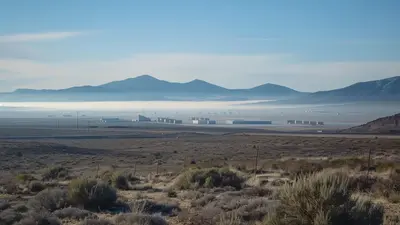
The case took place in Rendlesham Forest, near the former RAF Woodbridge and RAF Bentwaters bases in Suffolk.
At the time, both bases were used by the United States Air Force.
That location gives the story much of its power.
This was not a sighting from a remote farmhouse or a passing car. It happened beside sensitive military property during the Cold War.
Today, Forestry England describes Rendlesham Forest as a public woodland with walking and cycling trails. It even notes the famous UFO sighting from December 1980.
Visitors can still walk the UFO trail.
That alone tells you how deeply the story entered the local identity.
The First Night: Strange Lights Near RAF Woodbridge
The first major report came in the early hours of December 26, 1980.
Security personnel near RAF Woodbridge saw unusual lights beyond the East Gate.
At first, the concern was practical.
Had an aircraft come down in the forest?
A patrol went out to investigate.
That is when the story changed from a possible crash response into a UFO legend.
Witnesses later described lights moving through the trees. Some accounts describe a metallic, triangular or cone-shaped object. Others focus more on colored lights, movement, and the strange feeling of the scene.
For readers who love classic UFO cases, this is the hook.
Trained airmen went into the forest expecting one kind of emergency and came back with something much harder to explain.
Jim Penniston and the Object in the Forest
Sgt. Jim Penniston became one of the best-known witnesses connected to the first night.
He later described getting close to a structured craft on the forest floor.
In his telling, the object was dark, smooth, and marked with strange symbols.
He has said he touched it.
That detail made his account one of the most dramatic parts of the Rendlesham Forest story.
Many UFO sightings involve lights far away in the sky. Penniston’s account is different. It places a witness close to something physical, silent, and apparently manufactured.
Over the years, Penniston also described later memories involving binary code and a deeper message connected to the encounter.
Those later claims remain part of the Rendlesham mythology, but the core image is simpler and stronger: an airman in a dark forest, standing near a strange craft in the trees.
Charles Halt Enters the Story
The incident might have faded as a strange base rumor if Lt. Col. Charles Halt had not gone into the forest himself.
Halt was the deputy base commander.
He was not an anonymous witness. He was a senior officer with a job, a chain of command, and a reason to be careful.
After the first reports, Halt led a team into the forest to inspect the alleged landing area.
They found three small impressions in the ground, arranged in a triangular pattern.
They also took radiation readings.
Then, during a later night investigation, Halt and his team saw unusual lights in the sky.
Halt recorded parts of the event on a small tape recorder.
The Halt tape became one of the most famous artifacts in UFO history because listeners can hear the investigation unfolding in real time.
The Halt Memo
In January 1981, Halt wrote a memo about the events.
The memo was addressed to the British Ministry of Defence and titled “Unexplained Lights.”
That document matters because it moved the case from witness story to official paper trail.
Halt described the lights seen near RAF Woodbridge, the reported impressions in the ground, the radiation readings, and the later lights observed from the forest.
The tone of the memo is not wild.
It is brief, formal, and military.
That restraint is part of why the document became so important. It does not read like a fantasy. It reads like an officer trying to report something that did not fit the normal categories.
The Beams of Light
One of the strangest parts of the Rendlesham story is the report of beams.
Halt and others later described lights that appeared to move in the sky and send beams downward.
Some accounts say beams came down near the base area.
That detail gave the incident a sharper edge.
A distant light can be confusing. A light that seems to interact with the ground feels much more deliberate.
It is one reason Rendlesham remains such a powerful case in alien and UFO culture.
The story is not only about something seen. It is about something that seemed to act.
Why Military Witnesses Matter
Rendlesham is famous because of who reported it.
The key witnesses were U.S. military personnel.
They worked near active bases. They were trained to notice threats. They had procedures for unusual events.
That does not make every detail perfect.
Memory changes. Night conditions distort distance. People can disagree about what they saw.
But the military setting gives the case weight.
These were not people casually pointing at a star after a party.
They were airmen on duty near a secure facility, trying to understand lights and objects that did not belong in their normal night.
The Orford Ness Lighthouse Theory
The most famous ordinary explanation is the Orford Ness Lighthouse.
The lighthouse stood east of the forest, near the coast, and its beam was visible from the area.
Some researchers argue that the men mistook the flashing lighthouse for a UFO moving through the trees.
That theory has stayed with the case for decades.
It may explain some of the lights described from certain positions in the forest.
Many witnesses reject it.
They say the object they encountered was too close, too structured, and too strange to reduce to a distant beacon.
That tension is classic Rendlesham.
The lighthouse explanation is simple. The witness accounts are not.
Fireball, Stars, and Night Confusion
Other explanations focus on the sky itself.
A bright meteor was reportedly seen over southern England around the time of the first sighting.
Bright stars can also look strange near the horizon, especially through trees, mist, and moving air.
Sirius, one of the brightest stars in the night sky, has often been mentioned in discussions of the later lights.
Those explanations help explain why the case remains debated.
A person in the forest may see more than one thing in one night.
A meteor, a lighthouse, a star, aircraft lights, and heightened tension can layer together.
But for many Rendlesham witnesses, the event felt like more than a stack of coincidences.
The Ground Marks and Radiation Readings
The ground marks are another reason the case stuck.
Halt’s team reported three depressions in the soil.
They were arranged in a triangular pattern, which matched the idea of a landed craft.
Radiation readings were also reported as elevated in places.
Those details gave Rendlesham a physical dimension.
It was no longer only lights in the sky. There was a site. There were measurements. There were places people could point to.
That does not end the argument.
But it explains why this case still feels different from a simple sighting report.
Why the Case Changed Over Time
Like many famous UFO stories, Rendlesham grew after the original event.
Witnesses gave interviews.
Books were written.
Documentaries revisited the forest.
New details entered the public story.
Some witnesses became more certain. Others disagreed over the sequence, the object, or the meaning of what happened.
That does not make the case less interesting.
It makes it more human.
Rendlesham is not a frozen incident. It is a living story shaped by memory, military culture, media attention, and the pressure of being attached to one of the world’s most famous UFO cases.
Why Rendlesham Became Britain’s Roswell
Roswell has the crash.
Rendlesham has the forest.
Both stories involve the military, official statements, disputed explanations, and the feeling that something important happened just out of public view.
That is why Rendlesham earned the nickname Britain’s Roswell.
The comparison is not perfect.
Roswell centers on debris and alleged bodies. Rendlesham centers on witnesses, lights, a possible landed craft, and a formal memo.
But both cases became symbols.
They are not just about what happened on a particular night. They are about whether governments know more about UFOs than they have told the public.
Rendlesham Forest Today
Rendlesham Forest is now a UFO destination.
People visit the area, walk the trails, and look for the places tied to the 1980 reports.
There is even a UFO trail connected to the story.
That is rare.
Most UFO cases live in old newspaper clips, television specials, and internet forums.
Rendlesham lives in a real landscape.
You can walk through the trees and imagine the airmen moving through the dark, trying to understand what was ahead of them.
That physical setting keeps the case alive in a way few UFO stories can match.
What Makes Rendlesham So Hard to Let Go?
The case has no single clean shape.
It is part military report, part ghost story, part Cold War mystery, part alien encounter, and part local legend.
That mix is exactly why it survives.
If it were only a distant light, it would be easier to forget.
If it were only one witness, it would be easier to dismiss.
If it had no documents, no tape, no senior officer, and no physical location, it would not carry the same weight.
Instead, Rendlesham has just enough official reality to make the mystery feel close.
It has just enough strangeness to keep pulling people back into the forest.
Final Thoughts
The Rendlesham Forest incident endures because it feels like a door left open.
Something happened near RAF Woodbridge in December 1980.
U.S. airmen saw lights.
Some reported a craft.
Charles Halt wrote a memo and recorded an investigation.
The forest became a landmark.
The explanations have never satisfied everyone.
Maybe Rendlesham was a perfect storm of lights, landscape, and Cold War tension.
Maybe it was a close encounter with something far stranger.
Either way, the story still works because it begins in a place everyone understands.
A dark forest.
A light between the trees.
And men trained to protect a base, suddenly facing something they could not easily name.
Recommended