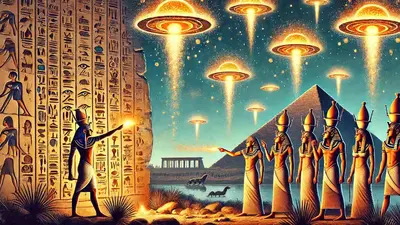
Types of Aliens: 12 Beings Reported in UFO Lore
Alien lore has its own cast of recurring beings.
Some are small and silent.
Some look almost human.
Some feel ancient, insect-like, reptilian, or spiritual.
These are not scientific species names.
They are the names people use in close encounters, abduction stories, contactee reports, channeled material, books, movies, and late-night UFO conversations.
That matters because the same shapes keep returning.
Greys. Nordics. Reptilians. Pleiadians. Mantids. Hybrids. Tall Whites.
Whether you read these accounts as testimony, symbolism, folklore, or something stranger, the patterns are now part of alien culture.
How This Guide Uses “Types of Aliens”
This guide treats alien types as reported archetypes.
In other words, this is a field guide to the beings people describe most often, not a biology textbook.
Each type has a look, a mood, and a role.
Greys feel clinical.
Nordics feel angelic.
Reptilians feel political and predatory.
Mantis beings feel intelligent, calm, and unnerving.
Together, they form the strange mythology people reach for when they try to describe intelligence beyond the human.
1. Greys – The Classic Abductors
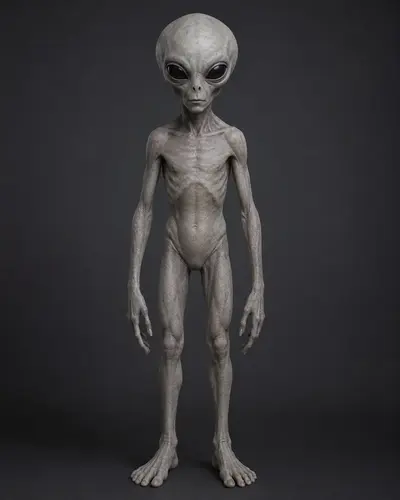
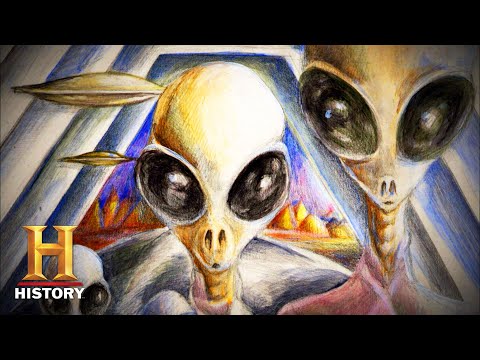
Greys are the modern alien default.
Small body.
Large head.
Huge black eyes.
No hair. Little expression. Almost no mouth.
They show up so often that even people who do not follow UFO stories know the image instantly.
In abduction lore, Greys are usually described as quiet, efficient, and strangely emotionless.
They rarely behave like movie monsters.
They behave more like technicians.
Witnesses describe paralysis, missing time, bright rooms, medical tables, telepathic commands, and an intense feeling of being studied.
The Betty and Barney Hill case helped push this image into the center of UFO culture.
The later Zeta Reticuli connection came from Betty Hill’s remembered star map and Marjorie Fish’s interpretation of it.
Stories That Shaped the Grey Image
- Roswell gave UFO culture its image of small recovered bodies.
- The Hill abduction gave the Grey archetype a powerful close-encounter template.
- Travis Walton’s 1975 experience helped bring the small alien medical-room image into popular culture.
- The Allagash case connected Greys with missing time, hypnosis, and shared memory.
2. Nordics – The Radiant “Space Brothers”
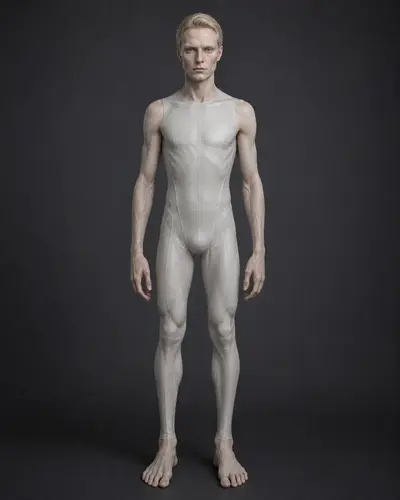
Nordics are the opposite of Greys in almost every way.
They are usually tall, blond, blue-eyed, calm, and very human-looking.
They do not arrive as surgeons in a cold room.
They arrive as “space brothers,” teachers, or guides.
The Nordic image grew out of the 1950s contactee era, when figures like George Adamski described friendly visitors with warnings about nuclear weapons and humanity’s spiritual direction.
These beings often appear in simple suits, glowing clothing, or almost angelic form.
The message is usually less about invasion and more about guidance.
Peace. Responsibility. Consciousness. The future of Earth.

Stories That Shaped the Nordic Image
- George Adamski’s 1952 Orthon story made the blond, friendly space visitor famous.
- Howard Menger’s accounts added romance, music, and spiritual teaching to the Nordic template.
- Billy Meier’s Semjase reports tied Nordic-looking beings to the Pleiadian/Plejaren tradition.
- The wider contactee movement turned Nordics into symbols of cosmic advice and moral warning.
3. Reptilians – The Hidden Overlords
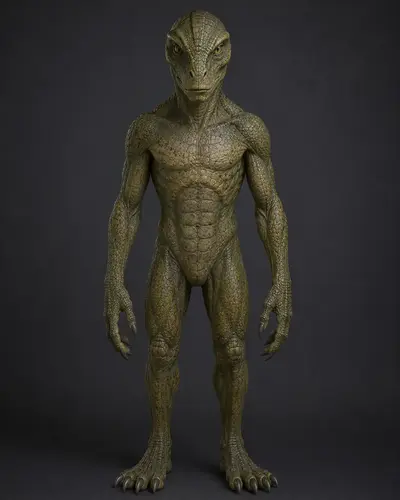
Reptilians are the alien type most tied to hidden power.
They are usually described as tall, muscular, scaled humanoids with slit-like eyes and a cold, predatory presence.
In some stories, they live underground.
In others, they move through society disguised as humans.
David Icke made this version famous in the late 1990s, connecting Reptilians with royal families, political leaders, secret bloodlines, and world control.
That idea spread far beyond UFO circles.
Reptilians became the alien face of distrust.
They represent the fear that the people steering civilization may not be human at all.

Stories That Shaped the Reptilian Image
- David Icke’s Reptilian theory gave the archetype its modern conspiracy structure.
- The Lacerta material framed Reptilians as an older, hidden Earth civilization.
- Dulce Base stories mixed Reptilians with underground facilities, Greys, genetics, and military secrecy.
- Abduction and regression accounts often place Reptilians above Greys in a hierarchy of control.
4. Pleiadians – The Star Teachers
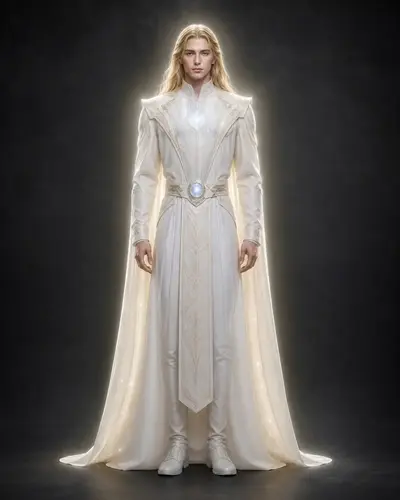
Pleiadians overlap heavily with Nordics, but the feeling is different.
Nordics are often visitors.
Pleiadians are often framed as family.
They are tied to the Pleiades star cluster and usually described as tall, beautiful, human-like beings with a deep interest in Earth’s spiritual growth.
In contactee and New Age material, their messages revolve around healing, vibration, awakening, and the idea that humanity is part of a larger galactic community.
Billy Meier’s Plejaren contacts helped make the Pleiadian link famous.
Since then, the term has become one of the most recognizable names in spiritual UFO culture.
Stories That Shaped the Pleiadian Image
- Billy Meier’s Semjase reports connected Pleiadians with UFO photographs, spiritual teaching, and long-term contact.
- Pleiadian channeling books helped move the beings from UFO lore into New Age spirituality.
- Workshops and starseed communities often present Pleiadians as gentle mentors for Earth’s transition.
- The Pleiades itself gives the mythology a bright, memorable anchor in the night sky.
5. Mantis / Insectoids – The Alien Scientists
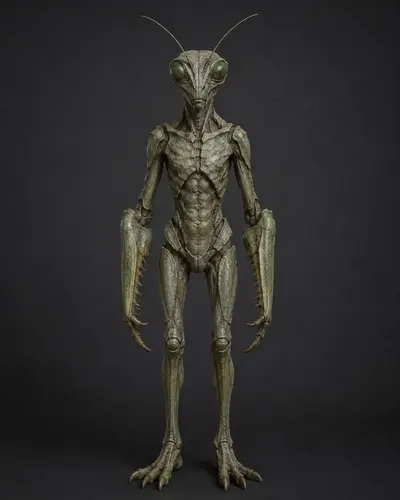
Mantis beings are among the strangest recurring figures in abduction lore.
They are usually tall, thin, and insect-like.
The head is triangular.
The eyes are enormous.
The body feels delicate, precise, and unsettlingly intelligent.
They often appear above the Greys in the chain of command.
Greys may do the hands-on work.
Mantis beings watch, direct, or intervene.
Some experiencers describe them as cold scientists.
Others describe them as priest-like, compassionate, or deeply connected to consciousness.
Stories That Shaped the Mantis Image
- Abduction reports describe mantis-like beings observing medical or reproductive procedures.
- Some regression accounts place them as supervisors rather than workers.
- Contact stories sometimes portray them as healers or consciousness specialists.
- The insect-like form gives the archetype a powerful mix of intelligence and alien distance.
6. Little Green Men – The Pop-Culture Icon
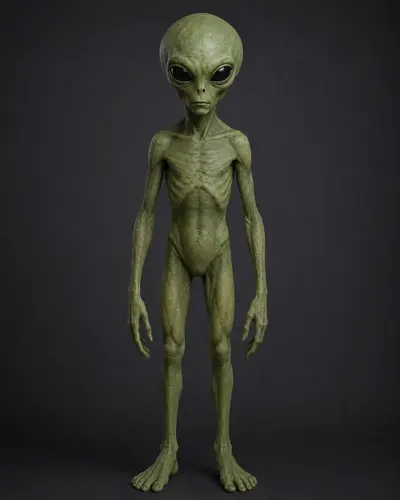
Little Green Men are less a witness category than a cultural icon.
The phrase became shorthand for aliens in general.
Small body. Green skin. Antennae. Mischief. Mars.
That version belongs mostly to cartoons, toys, pulp magazines, and old newspaper language.
Still, the phrase stuck because it is simple and instantly visual.
It turns the unknown into something almost cute.
The actual cases attached to the phrase are usually stranger than the mascot.
The Kelly–Hopkinsville encounter, for example, involved small goblin-like figures reported in rural Kentucky in 1955.
Press coverage helped tie the case to the “little green men” label, even though the witness descriptions were not the bright green cartoon version.
Stories That Shaped the Little Green Men Image
- Kelly–Hopkinsville turned a rural close encounter into one of America’s best-known “little men” stories.
- Science-fiction pulps and Mars stories made green skin part of the alien shorthand.
- Advertising and comedy turned the image into a friendly symbol of extraterrestrial weirdness.
7. Tall Whites – The Reserved Diplomats
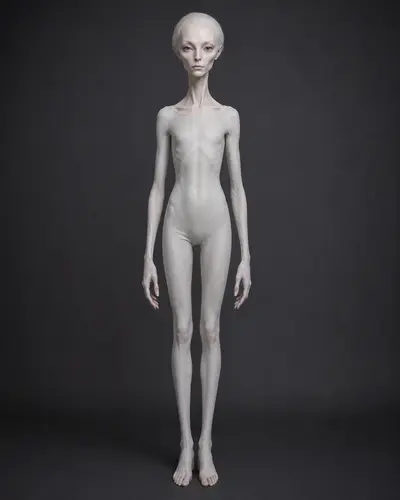
Tall Whites are pale, slender, and formal.
They do not feel like Greys.
They do not feel like Nordics either.
They are usually described as very tall humanoids with white or chalk-pale skin, light hair, and large pale eyes.
Their mood is reserved, cautious, and controlled.
Charles Hall made the Tall White archetype famous through his Millennial Hospitality books.
Hall described encounters near Nellis Air Force Base in Nevada during his time as an Air Force weather observer in the 1960s.
In those stories, the Tall Whites have their own rules, families, craft, and arrangements with human military personnel.
Stories That Shaped the Tall White Image
- Charles Hall’s Nevada accounts are the core modern source for Tall White lore.
- His stories describe strict etiquette, fear, curiosity, and limited human interaction.
- Later UFO writers connected the type with desert bases and quiet military agreements.
- The archetype works because it feels diplomatic rather than chaotic.
8. Hybrids – Bridges Between Species
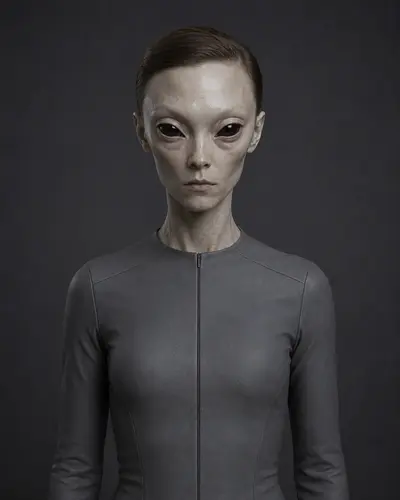
Hybrids are one of the most emotionally charged alien types.
They are not fully human.
They are not fully Grey.
They are usually described as children or young adults with human faces, large eyes, smooth skin, and an uncanny stillness.
Hybrid stories often appear inside abduction narratives.
An experiencer is shown a child.
The child seems partly theirs.
The moment can feel tender, disturbing, and impossible to forget.
Researchers such as Budd Hopkins and David Jacobs helped popularize the idea of hybrid programs in UFO literature.
That theme now sits at the center of many alien abduction accounts.
Stories That Shaped the Hybrid Image
- Abduction accounts often include “child presentation” scenes involving hybrid children.
- Budd Hopkins helped bring reproductive themes into mainstream abduction research.
- David Jacobs emphasized hybrids as part of a long-term infiltration story.
- Modern contact communities often frame hybrids as bridges between worlds.
9. Arcturians – Guardians of Consciousness
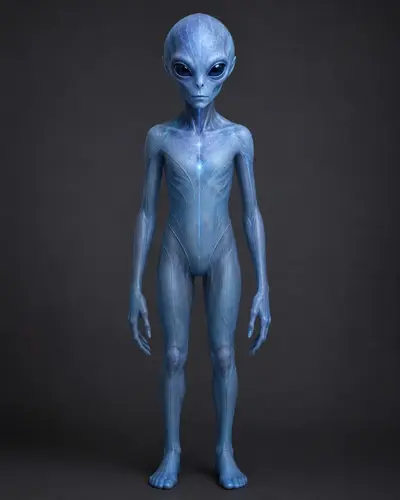
Arcturians belong more to spiritual contact lore than nuts-and-bolts UFO cases.
They are linked to Arcturus, the bright star in the constellation Boötes.
Descriptions vary, but they are often blue, luminous, gentle, or almost energy-like.
Their role is usually healing.
They appear in dreams, meditations, channeling sessions, and starseed material.
Where Greys study the body, Arcturians are said to work with consciousness.
They are guides, watchers, and energy workers in the wider alien mythology.
Stories That Shaped the Arcturian Image
- Edgar Cayce material helped give Arcturus a mystical reputation.
- Modern channeling communities turned Arcturians into advanced healers and guides.
- Starseed circles use the Arcturian label for people drawn to healing, service, and subtle energy.
10. Sirians – Keepers of Ancient Knowledge
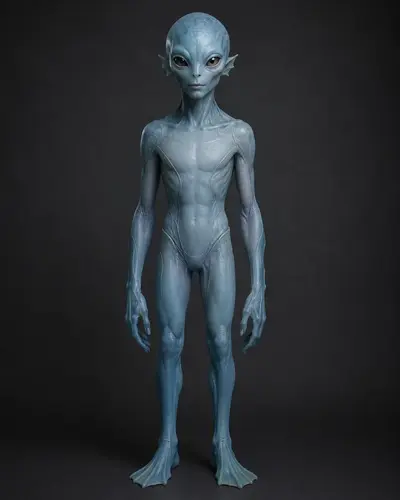
Sirians are tied to one of the brightest stars in Earth’s sky.
Sirius has always attracted myth.
Ancient Egypt linked the rising of Sirius with the Nile flood season.
Later esoteric writers and ancient-astronaut authors turned that star connection into alien lore.
Sirians are often described as wise, old, and connected to water.
Sometimes they appear as luminous humanoids.
Sometimes they are given aquatic or amphibious traits.
Their mythology is heavy with Egypt, Atlantis, temples, sound, geometry, and hidden knowledge.
Stories That Shaped the Sirian Image
- Ancient Egypt’s attention to Sirius gave later writers a powerful star-symbol to build on.
- The Dogon/Sirius mystery became a major talking point in ancient-astronaut circles.
- Sirian starseed material connects the type with water, sound healing, and memory of ancient civilizations.
11. Anunnaki – Gods of Old, Recast as Aliens
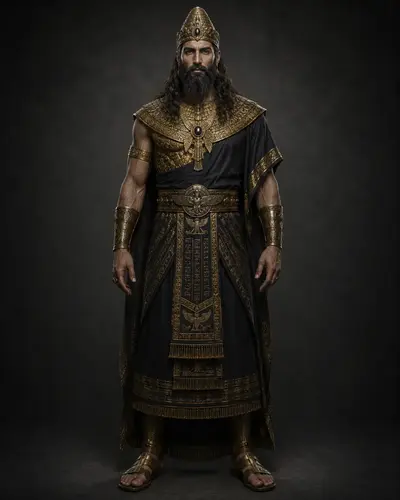
The Anunnaki are different from the other alien types on this list.
They begin as deities in ancient Mesopotamian religion.
Modern ancient-astronaut writers recast them as extraterrestrials.
Zecharia Sitchin made the alien Anunnaki famous with The 12th Planet in 1976.
In that version, the Anunnaki come from Nibiru, mine Earth’s resources, shape early civilization, and alter humanity’s origin story.
The appeal is obvious.
It turns mythology, kingship, pyramids, floods, gods, and human creation into one giant alien-history puzzle.
Stories That Shaped the Anunnaki Image
- Mesopotamian religion provides the original Anunnaki name and divine setting.
- Sitchin’s Earth Chronicles transformed the gods into visitors from Nibiru.
- Ancient-astronaut TV and online lore turned the Anunnaki into architects of hidden human history.
12. Lyrans – The Feline Ancestors
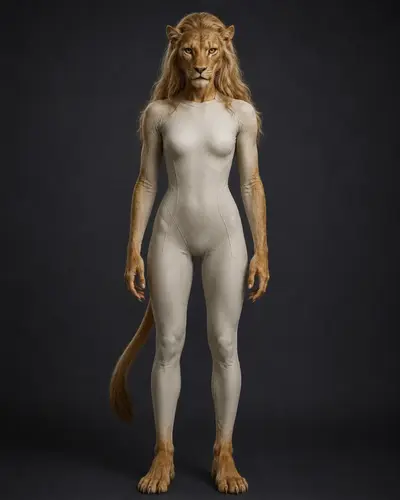
Lyrans are usually described as ancient, noble, and feline.
They are tied to Lyra, a small northern constellation with one very famous star: Vega.
In starseed lore, Lyrans are sometimes treated as one of the oldest human-like civilizations in the galaxy.
Some accounts describe them as tall humanoids with cat-like eyes, leonine features, graceful movements, or a regal presence.
Their role is ancestral.
They are cast as pioneers, builders, artists, and seeders of later civilizations.
If Greys are the lab and Reptilians are the throne room, Lyrans are the ancient mythic homeland.
Stories That Shaped the Lyran Image
- Starseed and regression accounts describe past lives connected to Lyra.
- New Age lineage systems often place Lyrans near the beginning of a wider galactic family tree.
- The feline image gives Lyrans a distinctive identity among mostly human-looking alien types.
Why These Alien Types Keep Returning
These alien types survive because they each do a different job in the imagination.
- Greys make alien contact feel clinical, cold, and close.
- Nordics and Pleiadians make it feel spiritual and hopeful.
- Reptilians and Anunnaki make it feel ancient, political, and dangerous.
- Mantis beings and Hybrids make it feel intimate, biological, and hard to explain.
- Arcturians, Sirians, Tall Whites, Little Green Men, and Lyrans fill out the larger map.
That is why a list of alien types is more than a novelty.
It is a map of the stories people keep telling about contact.
Fear. Guidance. Control. Evolution. Memory. Wonder.
The beings change from case to case, but the questions underneath them stay the same.
Who else is out there?
What do they want?
And if they have already been here, how would we recognize them?
Recommended