Zeta Reticuli and ZR3: The Star System Behind UFO Lore
Zeta Reticuli is real.
ZR3 is where the mystery begins.
The real star system sits about 39 light-years from Earth in the southern constellation Reticulum.
It has two Sun-like stars: Zeta Reticuli 1 and Zeta Reticuli 2.
They are wide apart, faint to northern observers, and easy to ignore if you are only doing astronomy.
But UFO culture does not ignore them.
Thanks to Betty and Barney Hill, Marjorie Fish, Bob Lazar, and Project Serpo, Zeta Reticuli became one of the most famous alien addresses in modern lore.
What Is Zeta Reticuli?
Zeta Reticuli is a wide binary star system.
That means it is made of two stars moving together through space.
Both stars are similar enough to the Sun to attract attention from people interested in life beyond Earth.
They are not close together like a tight binary pair.
They are separated by thousands of astronomical units.
From dark southern skies, the pair can be seen as two faint points.
That quiet little double star would probably be a niche astronomy fact if not for one famous abduction story.
The Betty and Barney Hill Connection
The Hill case is the reason Zeta Reticuli became legendary.
Betty and Barney Hill reported a terrifying encounter in New Hampshire in September 1961.
Their story became one of the first major alien abduction cases in American culture.
During later hypnosis sessions, Betty described a star map she said she had seen aboard a craft.
She drew points and lines from memory.
At first, the drawing did not name Zeta Reticuli.
The Zeta connection came later, when others tried to match the sketch to real stars.

Marjorie Fish and the Star Map
Marjorie Fish was an elementary school teacher and amateur astronomer.
After reading about the Hill case, she built a three-dimensional model of nearby stars using beads and thread.
Her goal was simple and bold.
Could Betty Hill’s remembered map match a real viewpoint in space?
Fish argued that it could.
Her proposed match placed the viewpoint near Zeta Reticuli.
That idea exploded in UFO circles because it seemed to turn a remembered drawing into a cosmic address.
From that point on, “the Zeta Reticuli incident” became another name for the Hill story.
Why the Map Still Fascinates People
The star-map story has everything UFO lore loves.
A frightened witness.
A recovered memory.
A hand-drawn map.
A later researcher building a model by hand.
A real star system that fits the mood perfectly.
Even people who disagree about the map understand why it became iconic.
It gives the alien story a place.
Not just “they came from somewhere.”
Zeta Reticuli.

What Does ZR3 Mean?
ZR3 is not a standard astronomical name.
You will not find it used the way astronomers name confirmed exoplanets.
In UFO culture, ZR3 is usually treated as a planet, home world, or destination connected to Zeta Reticuli.
The letters are easy to understand.
ZR suggests Zeta Reticuli.
The 3 suggests a third world, third body, or hidden place in the system.
That makes ZR3 sound official, even though it belongs to UFO mythology more than catalog astronomy.
The Bob Lazar Connection
Bob Lazar helped push Zeta Reticuli deeper into Area 51 culture.
Lazar claimed he worked near Area 51 at a site called S-4.
He said he saw information connecting recovered craft with Zeta Reticuli.
That claim joined two powerful mythologies.
The Hill star map gave Zeta Reticuli an abduction history.
Lazar gave it an alleged government reverse-engineering history.
Together, they made the system feel like the origin point behind the Grey alien story.
Are There Known Planets Around Zeta Reticuli?
Zeta Reticuli is not currently famous as a confirmed planet system.
That surprises many people because the name is everywhere in UFO lore.
A nearby system, Epsilon Reticuli, does have a known exoplanet.
That is a different star.
The distinction matters because Reticulum contains more than one named star system.
Zeta Reticuli can be astronomically real, culturally powerful, and still separate from confirmed planet catalogues.
The Project Serpo Story
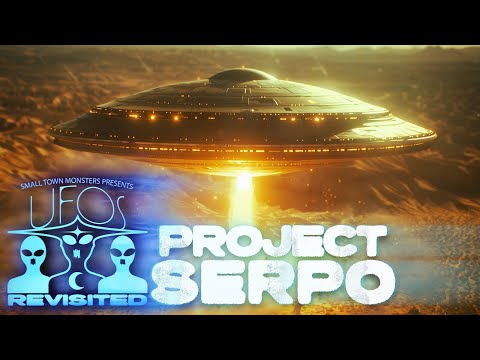
Project Serpo is one of the wildest Zeta Reticuli stories.
It appeared through anonymous internet posts in the 2000s.
The story describes a secret human exchange program with beings from the Zeta Reticuli region.
In the legend, humans travel to an alien world, live among its civilization, and return with extraordinary knowledge.
Serpo reads like a classified file crossed with science fiction.
That is exactly why it spread.
It gave Zeta Reticuli not just visitors, but a whole off-world exchange mythology.
Why Zeta Reticuli Remains So Popular
Zeta Reticuli works as UFO mythology because it feels close enough to matter.
Thirty-nine light-years is enormous for us.
But in science-fiction terms, it feels almost local.
The stars are Sun-like.
The Hill story gives them emotion.
The Fish map gives them geometry.
Lazar gives them secrecy.
Serpo gives them a hidden civilization.
That is a powerful stack of ideas for one quiet southern star system.
What Is Real, and What Belongs to UFO Lore?
The real part is the star system.
Zeta Reticuli is a measurable pair of stars with known positions, motions, and stellar properties.
The UFO part is the story-world built around it.
Betty Hill’s map, Fish’s interpretation, Lazar’s briefing claim, ZR3, and Serpo all live in that story-world.
That does not make the topic less fascinating.
It makes it a perfect AlienINT subject.
One foot in astronomy.
One foot in alien mythology.
And a question still hanging in the dark:
If the Greys have a home, why does Zeta Reticuli keep feeling like the address?
Recommended