
An Alien Harvest: The Book That Turned Cattle Mutilations Into a UFO Mystery
Most UFO stories start with lights in the sky. This one starts with a dead bull in a Colorado field.
Its left eye was gone, and so was a neat circle of hide around it. Three months on, not a single scavenger had touched it.
The TV reporter who filmed that bull spent the next decade chasing an explanation. The result was An Alien Harvest, a book with a question most people never think to ask.
What if something is collecting from us?
It's a big question, and it came from an unlikely place: a Denver newsroom.
Who Is Linda Moulton Howe?
Linda Moulton Howe ran special projects at KMGH-TV in Denver, and by 1979 she'd made her name on environmental stories. Her air and water pollution documentaries from 1976 to 1979 made her a national Emmy finalist and earned her an environmental award presented by Robert Redford.
Today you're more likely to know her from Earthfiles, the website she launched at the end of 1998, or from her many Ancient Aliens appearances. Our Linda Moulton Howe profile covers that whole career.
In September 1979, though, she was a science reporter with a new assignment: dead cattle.
Ranchers across the West were reporting animals found with missing parts and strangely clean wounds. Howe wanted to know what was doing it.
One animal in particular gave her a place to start.
The Bull That Started It All
According to Howe's Earthfiles biography, a bull on the C. E. Potts ranch near Walsenburg, Colorado, was found dead in July 1979. Three months later it was still lying there, untouched by predators.
When Howe filmed it in October 1979, the left eye was gone. Around the empty socket, a perfectly round pattern of hide had been cut away.
Now, a coyote can take an eye. A coyote is not known for its circles.
That's the detail that hooked her, and it's the detail her whole investigation grew from: precision where nature is supposed to be messy.
She took her cameras to more ranches, more carcasses and more baffled owners. Then she turned the footage into a film.
From a Documentary to a Book
A Strange Harvest aired on KMGH-TV as a 90-minute special on May 25, 1980. It drew the biggest audience in the station's history for a local documentary and won Howe a regional Emmy.
The documentary asked what was killing the animals. The book that followed, nine years later, offered an answer.
An Alien Harvest came out in June 1989, and its full title leaves no doubt about where it stands: Further Evidence Linking Animal Mutilations and Human Abductions to Alien Life Forms.
The official book description promises "bloodless, trackless" animal mutilations, abduction accounts and government documents, all pointing to the same culprit.
So what exactly is the argument? It runs in three steps.
What Does An Alien Harvest Argue?
1. Something Is Taking Parts, Not Lives
Howe's starting point is simple: a predator eats. It doesn't take one eye and leave the rest of the meal to the flies.
In her reading, the missing tissue is the point of the whole exercise. The animal is a source of biological material, and the mutilation is the collection.
2. The Same Story Shows Up in Abduction Accounts
People who describe being taken aboard craft often report medical-style examinations, with samples taken and bodies inspected.
Cases like the Betty and Barney Hill encounter made that pattern famous. Howe sets those accounts beside the animal cases and asks you to notice the resemblance.
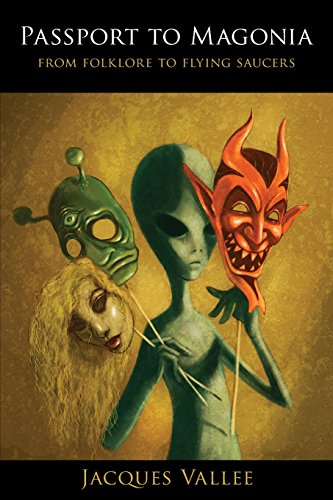
- Explore parallels between older folklore and modern UFO encounter accounts
- Read Jacques Vallee's influential approach to the history of contact stories
- Compare reports across eras instead of treating every case in isolation
3. Put Them Together and You Get a Harvest
If someone is collecting tissue from cattle and examining humans, the book argues, the simplest explanation is that they're the same someone.
That's the word harvest doing its work. It suggests the parts weren't just damaged but selected, and collected for a purpose.
It's a big idea, and Howe backs it with a lot of material. Here's what you'll find between the covers.
What's Inside the Book?
The expanded edition is packed with more than 200 color and black-and-white photos, plus maps, illustrations and documents. That's a lot of evidence to flip through.
The cases share a few signature details, and you'll see them again and again:
- Missing parts: typically one eye, one ear or the udder, plus what the FBI files politely call a "cored" rear end.
- Cuts that look clean: edges described as smooth, almost surgical.
- Not much blood: the "bloodless" part of Howe's description.
- No tracks: no footprints, tire marks or drag marks around the carcass.
- Scavengers stay away: like the Walsenburg bull, some animals sat untouched for weeks.
A photograph does one thing brilliantly: it shows you the damage. You'll see exactly which part is missing and understand why a rancher picked up the phone.

- Compare UFO encounters with recurring patterns in folklore and contact stories
- Explore Vallee's alternatives to a straightforward visitors-from-space explanation
- Broaden your reading beyond any single sighting or abduction case
What it can't do is replay the event. A picture shows the "after," never the "during," so the harvest idea rests on how you read those images.
Howe wasn't the only one reading them. By 1979, the FBI was looking at the same kind of carcasses.
What the FBI Files Say
The FBI's animal mutilation archive shows how seriously the subject was taken. On April 20, 1979, a conference in Albuquerque drew roughly 180 people, including law enforcement from several states, FBI representatives and the press.
The theories on offer were a buffet. Satanic cults, predators, pranksters, extraterrestrial visitors and "some unknown Government agency" all got a mention.
A federal grant then paid for a special investigative unit under the Santa Fe district attorney. Running it was Kenneth M. Rommel, a former FBI agent with a badge, a budget and a very different way of looking at a carcass.
On January 15, 1980, Rommel reported back. According to part five of the FBI records, none of the cases his unit examined involved anything beyond common predators, and the damage was always consistent with predator action.
Rommel's verdict covers the New Mexico carcasses he inspected, not the Walsenburg bull or every case in Howe's book. So the two files don't cancel each other out.
They do show two teams looking at the same kind of damage in the same years and reaching very different conclusions. Reading them side by side is half the fun of this subject.
If you want to do that, you'll want the right copy of the book.
Which Edition Should You Look For?
The original An Alien Harvest came out in June 1989. Copies exist, but the expanded second edition is the one with all the extras.
Here's what the Earthfiles listing promises for that one:
- Size: 488 pages at 8.5 by 11 inches, so more coffee table than paperback.
- Visuals: more than 200 color and black-and-white photos, maps, illustrations and documents.
- ISBN: 978-0-9620570-0-7.
One small wrinkle: the listing calls it the updated 2014 second edition, while Howe's biography calls it the 2015 edition. If you need a specific printing, check the copyright page or the seller's photos before you buy.
A quick disclosure: this guide draws on the official description, Howe's own account and public records, not a cover-to-cover reading. So it won't grade every case in the book.
So, Why Would Aliens Want Our Cattle?
Howe's answer is biological material: tissue collected from animals, and possibly from people, for reasons the collectors never explain.
The FBI's answer is that ordinary predators and scavengers account for the damage.
Which side you land on probably depends on how you feel about that neat circle of hide, and on where you stand on the bigger question of whether aliens exist at all. Read the book, read the files, and decide for yourself, ideally before your next drive past a pasture.
Linda Moulton Howe: How a Dead Bull Made a Denver Reporter a UFO Legend
Betty and Barney Hill Encounter: The UFO Abduction That Defined a Genre