
Linda Moulton Howe: How a Dead Bull Made a Denver Reporter a UFO Legend
- Who Is Linda Moulton Howe?
- The Assignment That Changed Everything
- A Strange Harvest: The TV Special That Hooked Denver
- What Do the FBI's Files Say?
- How Did That Become An Alien Harvest?
- Why Are Interviews Such a Big Part of Her Work?
- Radio, Sightings and Ancient Aliens
- What Is Earthfiles?
- Where Should You Start with Her Reporting?
Some reporters spend their careers chasing politicians. Linda Moulton Howe chased a dead bull across Colorado, and she has been on the trail of stranger things ever since.
Today she's the reporter behind Earthfiles, a familiar face on Ancient Aliens, and the name that comes up whenever cattle mutilations or crop circles do.
Before any of that, she was an award-winning environmental journalist at a Denver TV station.
So how does a smog documentarian end up interviewing people about experiments aboard alien craft? The answer starts in a pasture, but the reporter comes first.
Who Is Linda Moulton Howe?
Howe attended the University of Colorado and went on to Stanford, where she earned a master's degree in communication. Her early television work covered science, health and the environment.
By the late 1970s she was Director of Special Projects at KMGH-TV in Denver. Her air and water pollution documentaries from 1976 to 1979 made her a national Emmy finalist in 1978.
On January 1, 1980, actor and environmentalist Robert Redford handed her an Environmental Protection Agency award at the agency's Denver headquarters. Her official biography has the photo.
So she was a serious reporter with serious awards, which makes the assignment she'd taken a few months earlier all the stranger.
The Assignment That Changed Everything
In September 1979, Howe started looking into a wave of animal deaths that ranchers across the West were calling mutilations. The reports shared a pattern: missing tissue, very little blood, and cuts described as unusually precise.
Some accounts came with extras: strange lights, or unfamiliar aircraft near the pastures. Were these separate oddities, or signs of one shared cause?
One animal gave her a place to start, according to her biography: a prize bull on the C. E. Potts ranch near Walsenburg, Colorado, found dead in July 1979 and still untouched by predators three months later.
When Howe filmed it in October 1979, the left eye was gone and a perfectly round pattern of hide had been cut away around the socket. A coyote can take an eye; a coyote is not known for its circles.
She spent nine months on the road, filming carcasses and baffled ranchers in Wyoming, New Mexico and Colorado. Ranchers and law enforcement officers told her, on and off the record, that "the perpetrators of animal mutilations are creatures from outer space."
Then she turned the footage into a film.
A Strange Harvest: The TV Special That Hooked Denver
A Strange Harvest aired on KMGH-TV on May 25, 1980, as a 90-minute evening special. By her biography's count it drew the biggest audience in the station's history for a locally produced documentary, and it earned Howe a regional Emmy the following year.
The documentary argued that the damage went well beyond ordinary predator activity. Cameras could show the remains in unsettling detail, but they couldn't replay what had happened before anyone found the animal.
That missing part of the story became the puzzle Howe kept pursuing. She wasn't the only one working on it: the FBI had a file open too.
What Do the FBI's Files Say?
The FBI's animal mutilation records run to five parts and show how seriously the cases were taken. On April 20, 1979, an Albuquerque conference chaired by a U.S. senator drew roughly 180 people, including law enforcement from several states and the press.
The theories ranged from satanic cults and predators to visitors from outer space, and the files hold a stack of correspondence from people pushing their favorites.
Kenneth M. Rommel, who ran a special investigative unit for a New Mexico district attorney's office, took a harder look. On January 15, 1980, he reported that every carcass his unit had examined showed damage consistent with predator action.
Rommel's verdict covered the New Mexico cases he inspected, not the Walsenburg bull. So the files document the concern and the competing explanations without establishing Howe's proposed cause.
The dead animals were the easy part. Howe's explanation of how they got that way arrived nine years later, between hard covers.
How Did That Become An Alien Harvest?
In June 1989, Howe published An Alien Harvest. The full title leaves no doubt about where she stands: Further Evidence Linking Animal Mutilations and Human Abductions to Alien Life Forms.
The book set the animal cases beside accounts from people who said they'd been taken aboard craft and examined, and argued that the same visitors were collecting from both.
That's the word harvest doing its work: biological material taken for a purpose. Our guide to An Alien Harvest walks through the argument step by step and sorts out the editions.
It became the first of three big books on the subject, and an expanded second edition won a Best Non-Fiction award from the Southwest Book Association in 2015.
You can find the same instinct elsewhere in UFO writing: gather several strange things and look for one cause. Hunt for the Skinwalker, by Las Vegas reporter George Knapp and biochemist Colm Kelleher, does it with a single Utah ranch and its whole catalogue of reported oddities.
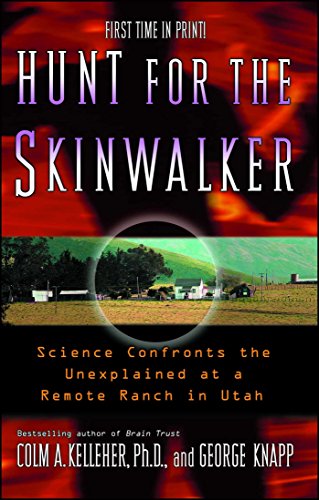
- Follow the ranch investigation in a full-length account coauthored by George Knapp
- Explore the reported events behind one of UFO culture's most discussed locations
- Compare the investigators' interpretations with the claims covered in the article
The attraction is obvious: one explanation that tidies up several puzzles at once. Showing that the puzzles really share a cause is the harder job, and Howe's proposed connections remain disputed.
Disputed or not, the book set the pattern for everything she did next: find the people with the strangest stories, and let them talk.
Why Are Interviews Such a Big Part of Her Work?
As Howe's subjects expanded, they took in crop formations, UFO sightings, alleged recovered materials and accounts of contact with nonhuman beings. She spent a decade on the crop circles alone, chasing formations in England, the United States and Canada from 1992 to 2002 for her book Mysterious Lights and Crop Circles.

- Mysterious crop circles appear on a family's farm, and the familiar landscape begins to feel threatening.
- Small sounds and glimpses at the edge of the frame turn a quiet farmhouse into an unsettling place to spend the night.
- Choose this fictional first-contact thriller when you want suspense that builds before anything steps into view.
Interviews gave the people behind those reports room to explain themselves. In a full conversation you hear what led up to the event, what the person noticed, and what they say happened afterward.
That doesn't establish every explanation a witness offers. It does help you understand the account before it gets squeezed into one startling sentence.
Howe wasn't alone in listening. John E. Mack, a Harvard Medical School psychiatrist with a 1977 Pulitzer Prize to his name, spent the 1990s interviewing people who said they'd been abducted and published Abduction: Human Encounters with Aliens in 1994.
Howe and Mack belong to a wider history of taking experiencers seriously, even if they didn't share methods or conclusions. Between them, the long interview became the main way audiences met these stories.
Radio, Sightings and Ancient Aliens
If you listened to late-night radio in the 1990s, you probably heard her. From 1991 to 2004 Howe produced and reported news segments for Coast to Coast AM, Art Bell's late-night paranormal show, and for his companion program Dreamland.
When Bell left radio in 2004, she carried on with Coast to Coast AM under host George Noory until February 2019.

- Pilots, military officers, and officials describe encounters that challenged their understanding of the skies.
- James Fox brings accounts from around the world together, letting you hear the witnesses in their own words.
- An absorbing pick for anyone who wants the longer story behind a startling sighting report.
Television found her anyway. She was supervising producer and original concept creator for UFO Report: Sightings, first broadcast in October 1991, which grew into the FOX series Sightings.
Then came Ancient Aliens, which interviewed her for all fourteen seasons up to 2020. In 2010 she even travelled with the production to RAF Bentwaters for the 30th anniversary of the Rendlesham Forest incident.
The catch with a cable clip is the format: an excerpt serves the producers' chosen theme, so the full interview may include dates, context and caveats the clip leaves out.
If a clip catches your attention, follow it back to the source: the archive she built herself.
What Is Earthfiles?
Earthfiles began at the end of 1998, according to its account of the site's origins. It gathers Howe's work on science, the environment and unexplained phenomena in one place, and her biography now counts nearly 3,000 in-depth reports there.
An archive does something a single broadcast can't: it lets a story continue, so a later interview can return to an earlier case.
Her interests never shrank to the topics that fill UFO compilations, either: the site's sections still run Science and Environment alongside Real X-Files.
Access varies by report: some pages offer introductory material, while the fuller coverage sits behind a subscription.
Where Should You Start with Her Reporting?
The official Earthfiles homepage links to her reports and channels. Pick a subject and read one complete report before you jump between highlight clips.
Check the publication date as you go, because a newly uploaded conversation may revisit an older case rather than report a new one.
For the story of Howe's career, start with A Strange Harvest and the cattle investigations. They explain how an environmental reporter ended up as the voice of the unexplained.
Her explanations remain disputed, but her role in bringing these accounts to readers, viewers and listeners is not. Start with the bull, and see how far the trail takes you.
An Alien Harvest: The Book That Turned Cattle Mutilations Into a UFO Mystery
George Knapp: UFO Reporter, Bob Lazar, Area 51, and Skinwalker Ranch