
Famous Ufologists: The 30 Scientists, Reporters and Contactees Worth Knowing
Thirty people, one word, and almost nothing else in common: that's the crowd waiting for you under the label "ufologist."
One of them walked on the Moon. One ran the British government's UFO desk, and one says he met a man from Venus in the California desert.
Some measured photographs, some chased documents, and a few insist the visitors came to them personally.
This guide sorts them into five rough camps, with a book or a project for each, so you know which door to open first.
If the label itself is new to you, our guide to what a ufologist does covers the basics.
The scientists come first, because they built the vocabulary everyone else borrowed.
Start with the Scientists
A strange sighting raises several problems at once. Was the photograph misleading, did the object really move that way, or have people been describing something similar for centuries?
These five didn't all pick the same problem, which is exactly why they work so well together.
J. Allen Hynek
Hynek is the astronomer the U.S. Air Force hired to look at its UFO reports, and the one who couldn't quite look away. He joined Project Sign as a consultant in 1948 and stayed with Project Blue Book until it closed in 1969.
Fame arrived sideways in 1966, when he suggested that lights over Michigan might have been "swamp gas" and became a punchline for cartoonists. By 1973 he had founded the Center for UFO Studies to do the job on his own terms.
His 1972 book The UFO Experience introduced the close-encounter categories, which describe an encounter without deciding where the object came from. Steven Spielberg borrowed the third one for a movie title and gave Hynek a pipe-smoking cameo in the finale.

- A roadside UFO encounter leaves an ordinary man consumed by a mystery he cannot shake.
- Steven Spielberg turns strange lights and growing curiosity into a science-fiction adventure filled with wonder.
- Watch the Special Edition and discover why this film remains such a familiar touchstone in UFO culture.
Spielberg borrowed something else from the next name on this list.
Jacques Vallée
Vallée, a researcher with a foot in astronomy and another in computing, inspired Claude Lacombe, the French investigator played by François Truffaut in Close Encounters of the Third Kind. He is also the man who makes the flying-saucer explanation less comfortable.
Drawing on astronomy, computing and historical patterns, he asks whether modern encounters belong to a much longer history of unusual visitors. Passport to Magonia compares UFO accounts with older folklore, and Wonders in the Sky, written with Chris Aubeck, takes that interest into historical reports.

- Compare UFO encounters with recurring patterns in folklore and contact stories
- Explore Vallee's alternatives to a straightforward visitors-from-space explanation
- Broaden your reading beyond any single sighting or abduction case
Where Vallée looked backward, a NASA engineer looked at the flight path.
Paul R. Hill
Hill spent his career at NASA's Langley Research Center and its predecessor, joining in 1939 and retiring in 1970 as associate chief of its Applied Materials and Physics Division. He also had two UFO sightings of his own, in 1952 and 1962, and treated reported UFO motion as an engineering problem.
Publishers turned down his manuscript during his lifetime. Unconventional Flying Objects finally appeared in 1995, five years after his death, arguing that the reported maneuvers "obey, not defy, the laws of physics."
The analysis depends on the observations describing the behavior accurately. It isn't a demonstration of a working propulsion system, but it shows how an engineer can start tackling the reported movements.
Hill kept his views quiet while he worked. The next scientist did the opposite.
Stanton T. Friedman
Friedman was a nuclear physicist who turned the case for extraterrestrial visitors into a touring act, delivering more than 700 lectures titled "Flying Saucers Are Real." His advice to colleagues was blunt: "Don't be an apologist ufologist."
He is recognized as the original civilian investigator of the Roswell events, which makes him a useful introduction to ufology's liveliest public arguments. After his death in 2019, Roswell gave him one of the first two plaques on its UFO Walk of Fame, alongside Jesse Marcel Sr., the officer who helped retrieve the 1947 debris.
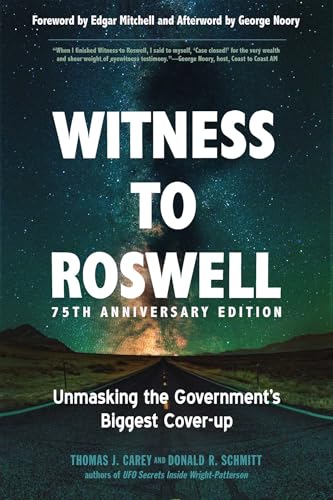
- Explore the Roswell witness accounts assembled by Thomas Carey and Donald Schmitt
- Follow the authors' case for a cover-up in one extended investigation
- Compare their interpretation with the official explanations and records discussed in the article
Friedman argued from documents and interviews. The last scientist in this group argued from pixels.
Bruce Maccabee
An impressive UFO photo is where Maccabee's specialty comes in. The optical physicist worked for the U.S. Navy from 1972 until his retirement in 2008, and separately examined famous images, from the 1950 McMinnville photographs to the Gulf Breeze sightings of 1987 and 1988.
He brought questions about exposure, distance and camera effects to pictures that might otherwise be judged at a glance. He died in 2024, having also helped found the Fund for UFO Research back in 1979.
Follow the Reporters and the Paper Trail
Of course, you need an account to investigate before you can measure anything. The next group became known for finding witnesses, prying loose documents, and following what institutions did with the reports they received.
Donald Keyhoe
Keyhoe was a retired Marine Corps major who made military knowledge and public accountability central to the early UFO debate. His 1950 book The Flying Saucers Are Real sold more than half a million copies in paperback.
He co-founded the civilian group NICAP in 1956 and ran it until 1969. His most famous moment came on live CBS television in January 1958, when his microphone was cut mid-sentence as he strayed from the approved script, an incident he blamed on the Air Force rather than the network.
Keyhoe's work takes you back to the arguments before the abduction and crash-retrieval stories arrived. The next reporter found her way in through a very different door.
Linda Moulton Howe
For Linda Moulton Howe, a Denver TV assignment about mutilated cattle became a route into much wider claims about nonhuman activity. Her 1980 documentary A Strange Harvest grew into the book An Alien Harvest and, eventually, the Earthfiles archive.
Following that progression lets you watch a science reporter turn into a collector of unusual accounts.
Howe's cases are mostly American. The next name insists the story is bigger than one country.
Timothy Good
Good is a British researcher, and a working violinist as well, whose 1987 book Above Top Secret broadened the map beyond familiar American cases. The Observer called him "Britain's leading UFO researcher" the year it came out.
The book gathers reports and concealment claims from an international perspective. It's useful when your UFO reading has started to feel permanently parked beside a U.S. military base.
Two years after Above Top Secret, a Las Vegas newsroom produced the most famous UFO interview of them all.
George Knapp
You can hardly get through the Bob Lazar story without meeting George Knapp, the KLAS reporter who put Lazar's claims on television in 1989. His later work includes Skinwalker Ranch and government-related UFO reporting, and Netflix eventually built the docuseries Investigation Alien around his globe-trotting investigations.
Our George Knapp news page gives you dated stories to start with. It helps separate a new development from an old case getting another round of attention.
Two years after Knapp's broadcast, a young British civil servant was handed the strangest desk in Whitehall.
Nick Pope
Pope ran the Ministry of Defence's UFO desk from 1991 to 1994, part of a 21-year civil service career that ended in 2006. Open Skies, Closed Minds (1996) gives his account of that job, before his later role as a public commentator.
He also contributed a firsthand account to Leslie Kean's book, further down this list. Pope died in April 2026 at 60, so his books are now the closest thing to a memoir of that desk.
Pope had the files handed to him. The next man had to ask for them, and he started at 15.
John Greenewald Jr.
Greenewald began filing Freedom of Information Act requests in 1996, at age 15, and never stopped. His Black Vault archive now holds close to four million pages of government records.
It's the place to satisfy the urge to open the documents yourself. Alongside the released files, an agency's response tells you what it searched for, what it found and what it withheld.
Documents are one way to build a case. The next writer built his from a much larger pattern.
Jim Marrs
Marrs was a Texas newspaperman who spent nearly 20 years at the Fort Worth Star-Telegram and taught a course on the Kennedy assassination at the University of Texas at Arlington from 1976 to 2007. His 1989 book Crossfire influenced Oliver Stone's film JFK.
Alien Agenda brings that wider interest in secrecy and conspiracy narratives into UFO writing. It connects claimed encounters with a much larger proposed history of hidden activity.
Marrs died in 2017. The next author zeroed in on a single forest.
Peter Robbins
Robbins co-authored Left at East Gate with Larry Warren, which makes the book part of the long Rendlesham Forest debate.
Keep the earlier Rendlesham record alongside it, because the witnesses' accounts don't always line up. Reading them side by side is half the point.
From one forest, the next historian zooms out to the whole national security apparatus.
Richard Dolan
If you keep asking what officials were doing while a sighting made headlines, Dolan's approach may suit you. UFOs and the National Security State places reports alongside institutions, secrecy and official responses.

- Explore Richard Dolan's chronology of UFO reports and government secrecy claims
- Place individual encounters within a longer period of Cold War history
- Use a detailed historical volume to follow up on cases that brief articles can only introduce
Dolan wrote about institutions. The last reporter here got the institutions to talk.
Leslie Kean
Kean's 2010 book UFOs: Generals, Pilots, and Government Officials Go on the Record puts professional witnesses at the center of the story. It became a New York Times bestseller, with a foreword by former White House chief of staff John Podesta and firsthand accounts from five Air Force generals.
Then she helped change the beat itself. On December 16, 2017, she co-wrote the New York Times story, with Helene Cooper and Ralph Blumenthal, that revealed the Pentagon's Advanced Aerospace Threat Identification Program, a $22 million effort that ran from 2007 to 2012.
In June 2023 she and Blumenthal broke the David Grusch story. Start here if aviation cases and the official handling of unusual reports are what interest you.
Meet the People Behind Encounter Stories
A report about a distant light raises different questions from a person saying something happened directly to them. Memory, interpretation and the methods used to explore an experience move to the center.
George Adamski
Adamski was an amateur astronomer with a homemade observatory near Palomar Mountain, California, and the most famous of the early "contactees." In November 1952, he said, he met a visitor from Venus near Desert Center while companions watched from a distance.
Flying Saucers Have Landed (1953), written with Desmond Leslie, told that story and launched a genre. His accounts of humanlike extraterrestrials and trips aboard their craft helped popularize the idea of friendly visitors.
Adamski's visitors were friendly. The ones in the next entry were not.
Budd Hopkins
Hopkins was an Abstract Expressionist painter whose work sits in the collections of the Metropolitan Museum of Art and the Museum of Modern Art. A 1964 sighting off Cape Cod pulled him into a second career.
Missing periods of time became a major part of abduction discussions through Missing Time and then Intruders, a 1987 bestseller that spent four weeks on the New York Times list. He used hypnosis, which makes the questions about hypnotic recollection relevant when following those accounts.
One of the people Hopkins hypnotized was an author with a story of his own.
Whitley Strieber
With Communion, you're reading an author's account of experiences he was trying to understand. Published in February 1987, it stayed on the nonfiction bestseller lists for six months, and its cover portrait of a large-eyed "visitor" became one of the most recognizable alien images in pop culture.
Strieber brought that personal story to a huge audience, rather than presenting himself as an investigator collecting other people's sightings. Christopher Walken played him in the 1989 film.
Bestsellers get attention. A Harvard professorship gets a different kind.
John E. Mack
Mack was a Harvard psychiatrist who had already won a Pulitzer Prize in 1977 for A Prince of Our Disorder, his biography of T. E. Lawrence. For more than ten years he then studied people reporting alien abduction experiences.

- Return to the Zimbabwe school where dozens of children reported an extraordinary encounter near their playground.
- Hear witnesses revisit the experience years later, giving a familiar UFO story a deeply personal dimension.
- Choose this documentary when you want to spend time with the people behind a case that still raises questions.
Abduction (1994) and Passport to the Cosmos (1999) cover that work. Harvard opened a fourteen-month inquiry into his research in 1994 and ended it by reaffirming his academic freedom, as the Mack Institute biography recounts.
Mack died in 2004. The next two authors start from very different assumptions.
L. A. Marzulli
Marzulli brings religious themes, including the Nephilim, to UFO and related claims. His work shows how an encounter can become part of a theological argument, starting from different assumptions than an optical or aviation investigation.
Billy Carson
Billy Carson connects extraterrestrial themes with ancient civilizations and alternative history. His work sits within the wider media world around ufology, where one unusual subject tends to lead readers into another.
Experiencers ask what happened to them. The next group asks what governments know.
Get to Know the Disclosure Advocates
For some figures, the main public question is what institutions should reveal or investigate. Their campaigns overlap with research, but a person's role in a campaign doesn't tell you where each claim originated.
Steven M. Greer
Greer founded the Center for the Study of Extraterrestrial Intelligence and The Disclosure Project. On May 9, 2001, he assembled more than twenty military, intelligence, government and corporate witnesses at the National Press Club in Washington.
Witness events, campaigns for disclosure and proposed contact practices are the main places you'll encounter his work. Four years after that press conference, a politician raised the stakes.
Paul Hellyer
Hellyer was Canada's minister of national defence from 1963 to 1967, the man who merged the country's separate services into one Canadian Armed Forces. He also opened a "UFO landing pad" in St. Paul, Alberta, in 1967, a goodwill gesture for Canada's centennial.
Decades later he became the first cabinet-level minister of a G7 nation to allege the existence of extraterrestrials. He called on governments to disclose the alien technology he believed they had recovered, right up to his death in 2021 at 98.
His background attracted attention, but each later statement still needs to be understood as personal knowledge or information he received from others, a caveat that applies just as much to the next advocate, who had been much farther from home.
Edgar Mitchell
Mitchell was the lunar module pilot on Apollo 14, which launched on January 31, 1971, and the sixth person to walk on the Moon. He spent a then-record 33 hours and 31 minutes on the surface, and ran a private ESP experiment on the way there and back.
After leaving NASA he founded the Institute of Noetic Sciences to study consciousness, and he later called the Roswell incident real while admitting he had no firsthand UFO experience. Those comments came from other parts of his life, even when headlines placed them beside his lunar footprints.
Mitchell died in 2016. The next campaigner narrowed the whole subject to one very specific kind of location.
Robert Hastings
Nuclear weapons facilities give Hastings a recurring setting to investigate. UFOs and Nukes develops his argument through accounts from former military personnel, and he says he has interviewed more than 150 veterans.

- Former military personnel recount unsettling UFO reports around nuclear weapons facilities.
- Follow Robert Hastings as he examines the accounts linking unexplained sightings with some of the world's most sensitive sites.
- A focused documentary for viewers drawn to military witnesses and the national-security side of the UFO question.
On September 27, 2010, he hosted a National Press Club press conference at which seven Air Force veterans described UFO incursions at nuclear weapons sites. It's a narrow beat, and that focus is the appeal.
From missile silos, the last advocate moves to the Oval Office.
Grant Cameron
Cameron became known for following UFO claims around U.S. presidents and disclosure politics. His work takes you into public statements and official messaging, where a change of wording can become a story of its own.
Recognize the Famous Claimants and Commentators
Some names are famous because they're the source or the presenter of an extraordinary claim. Knowing that role explains why they share a stage with people doing very different work.
Bob Lazar
Bob Lazar says he worked on recovered craft at a site called S-4 near Area 51, and Knapp's 1989 interviews made him famous. The alleged workplace became a major part of UFO culture, while the extraterrestrial technology and key credentials remain publicly unsubstantiated.
Lazar described a workplace. The next claimant described a filing cabinet.
Philip J. Corso
Corso served in the U.S. Army from 1942 to 1963 and retired as a lieutenant colonel. In The Day After Roswell (1997), written with William J. Birnes, he claimed that debris from the 1947 crash passed through his hands and was quietly seeded to industry, producing fiber optics, lasers, integrated circuits and Kevlar.
His military service is documented; the technology-transfer account is a separate thing to weigh. Corso died in 1998, a year after the book came out.
Corso claimed one crash. The next commentator claims the whole planet.
David Icke
David Icke's reptilian narrative belongs to a wider alien-related conspiracy culture. His reach helps explain why his name appears in the conversation, although his approach differs from conventional UFO case investigation.
Icke's claims span the globe. The last name on the list brought his to a congressional chamber.
Jaime Maussan
Maussan is a Mexican broadcaster known for promoting UFO footage and alleged nonhuman specimens. In September 2023 he presented two small three-fingered bodies to Mexico's Congress under oath, saying they had been found in Peru in 2017 and were about 1,000 years old.
Scientists at Mexico's National Autonomous University quickly rejected the claims, and Ryan Graves, the military veteran who testified the same day, called the display "a huge step backward." The cases differ, so follow the history and identification of the particular image or specimen that interests you.
Where Should You Start Reading?
Choose the part of the subject that already makes you curious. Hynek helps you organize encounters, Greenewald gives you documents to open, Kean introduces professional witnesses, and Vallée takes the questions into older history.
You don't need to work through everybody before finding something worthwhile. Pick one question, follow the book or project attached to it, and let the next useful name come out of that reading.
Thirty names sounds like homework. Taken one door at a time, it's the best guest list in the field.
George Knapp: UFO Reporter, Bob Lazar, Area 51, and Skinwalker Ranch
Wonders in the Sky Review: Ancient UFO Reports Before 1879