
Roswell UFO Incident: Crash, Cover-Up, and Alien Legend
- It Started With Something Strange in the Desert
- The Day the Army Announced a Flying Saucer
- The Government Really Was Hiding Something
- The Man Who Brought Roswell Back From the Dead
- What About the Alien Bodies?
- Were the Aliens Actually Crash-Test Dummies?
- The Missing Records That Fueled the Cover-Up Theory
- How Roswell Became the UFO Capital of the World
- So, Did a UFO Really Crash at Roswell?
In July 1947, the U.S. military made an announcement that probably seemed unbelievable, even to the people who wrote it.
It had recovered a flying disc.
Something strange had apparently crashed on a ranch near Roswell, New Mexico, and the Army had collected the wreckage.
Newspapers jumped on the story. Had the military really found a flying saucer?
Then, almost as quickly as the excitement began, everything changed.
The military announced that the mysterious object wasn't a flying saucer after all.
It was a weather balloon.
And that was supposed to settle the matter.
Except it didn't.
Decades later, witnesses began telling stories about strange wreckage, secret military operations, and even alien bodies.
What started as a few pieces of debris in the desert became one of the biggest UFO mysteries in history.
So what really happened at Roswell?
It Started With Something Strange in the Desert
The story began when a rancher named Mac Brazel discovered unusual debris scattered across his property northwest of Roswell.
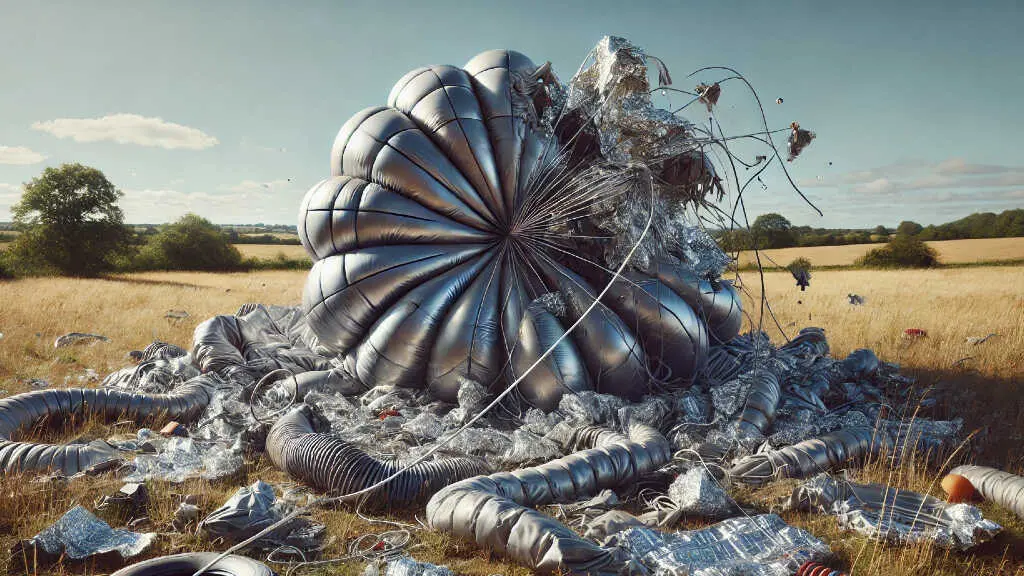
The material included rubber strips, shiny foil, paper, and wooden sticks.
It didn't look like much, but Brazel couldn't explain where it had come from.
He eventually reported the discovery to Sheriff George Wilcox, who contacted nearby Roswell Army Air Field.
And this wasn't just any military base.
Roswell was home to the 509th Bomb Group, the military unit responsible for America's atomic bombing missions.
In 1947, nuclear weapons were still a closely guarded American secret.
So when strange material appeared in the desert, the military had plenty of reasons to investigate.
Major Jesse Marcel, an intelligence officer at the base, helped recover the debris.
What happened next would make Roswell famous.
- Explore the Roswell witness accounts assembled by Thomas Carey and Donald Schmitt
- Follow the authors' case for a cover-up in one extended investigation
- Compare their interpretation with the official explanations and records discussed in the article
The Day the Army Announced a Flying Saucer
On July 8, 1947, Roswell Army Air Field issued a statement announcing that it had recovered a "flying disc."
That was a big deal.
Just weeks earlier, pilot Kenneth Arnold had reported seeing mysterious objects flying near Mount Rainier in Washington.
The country was already fascinated by flying saucers.
Now the military was claiming to have one.
The Roswell Daily Record ran the famous headline announcing that the Army had captured a flying saucer on a ranch near Roswell.
But the excitement didn't last.
Within hours, military officials in Fort Worth were showing reporters what they said was the recovered material.
General Roger Ramey explained that it came from a weather balloon and its radar-tracking equipment.
By the following day, newspapers were reporting that the flying saucer mystery had been solved.
But the sudden reversal left one question hanging in the air.
If it was just a balloon, why had the military announced that it recovered a flying disc?
That question would keep the story alive long after the headlines disappeared.
The Government Really Was Hiding Something
Here's where Roswell gets interesting.
The weather balloon explanation wasn't entirely wrong, but the military hadn't told the public everything.
In the 1990s, the Air Force revealed that the wreckage was most likely connected to a classified project called Project Mogul.
During the early Cold War, the United States was trying to learn whether the Soviet Union was developing nuclear weapons.
To help answer that question, the military launched high-altitude balloons carrying special listening equipment.
The idea was to detect the sounds of distant nuclear explosions.
Naturally, the government didn't want the Soviets knowing about it.
The balloons themselves weren't alien technology. They were made from ordinary materials, including rubber, foil, and lightweight supports.
Some radar targets even used tape decorated with colorful designs.
Those markings may help explain later witness stories about strange symbols on the wreckage.
Suddenly, Roswell had a perfectly believable explanation.
The military really had been hiding something.
The secret just wasn't necessarily a spaceship.
But by the time Project Mogul became public knowledge, the Roswell story had already grown far beyond a crashed balloon.

- James Fox brings decades of UFO reports together through witness interviews and archival footage.
- Go beyond the isolated clip and discover the people, history, and questions behind the sightings.
- An inviting first documentary for newcomers, with enough paths to follow to keep longtime UFO readers curious.
The Man Who Brought Roswell Back From the Dead
One of the strangest things about Roswell is how quickly the original story faded.
After the 1947 headlines, the incident attracted relatively little attention for about 30 years.
Then Jesse Marcel, the intelligence officer who had helped collect the debris, began talking.
In 1978, Marcel spoke with UFO researcher Stanton Friedman.
He claimed the material he recovered had been unlike anything he recognized.
And he didn't believe the weather balloon explanation.
Marcel's account helped bring Roswell back into the spotlight.
Then, in 1980, authors Charles Berlitz and William Moore published The Roswell Incident.
The book brought together witness stories, rumors about hidden wreckage, and claims that the military had recovered something extraordinary.
Suddenly, Roswell wasn't just a case of mistaken identity.
It was becoming a story about an alien crash and a government cover-up.
And the most sensational claims were still to come.

- Read Corso's account of alleged recovered technology in his own book
- Explore a major influence on modern crash-retrieval and reverse-engineering stories
- Compare the memoir's claims with the historical record and other Roswell accounts
What About the Alien Bodies?
For UFO believers, the debris was only half the story.
Over the years, people began claiming that military teams had recovered small, humanlike bodies from the New Mexico desert.
Some accounts described bodies being loaded onto trucks or transported to secret facilities.
Others suggested the military had recovered an entire spacecraft at a second crash site.
One especially famous story came from Roswell mortician Glenn Dennis.
Dennis claimed that a nurse had told him about strange bodies being examined at the military base.
If true, that would have been an incredible discovery.
But there's a problem.
The nurse's account was never independently confirmed, and Dennis wasn't claiming to have personally witnessed an alien autopsy.
Other stories also appeared decades after the original incident, making them difficult to verify.
Marcel's son, Jesse Marcel Jr., recalled seeing pieces of wreckage with unusual symbols.
Those memories became famous, too.
But they weren't supported by surviving alien materials that scientists could examine.
To believers, the witness stories suggested something much bigger than a balloon crash.
To skeptics, they showed how a mystery could grow as people remembered and retold it over many years.
And the Air Force eventually offered its own explanation for the supposed bodies.
Were the Aliens Actually Crash-Test Dummies?
In 1997, the Air Force released another Roswell report.
This time, it focused on the stories about alien bodies.
Its explanation was surprisingly ordinary.
Crash-test dummies.
During the 1950s, the military used human-shaped dummies in experiments involving high-altitude balloons and parachutes.
Some of these dummies were carried across the desert and recovered by military teams.
The Air Force suggested that people may have remembered seeing these unusual operations and later connected them to Roswell.
It also argued that memories of real military accidents had become mixed into the alien-body stories.
But there's an obvious problem with that explanation.
The dummy experiments happened years after 1947.
The Air Force's argument was that witnesses had confused events from different years, not that the dummies were recovered during the original Roswell incident.
Critics weren't convinced.
And the debate continued.

- Thirty-four insiders discuss UFOs and government secrecy on camera, putting faces and voices to a story usually told through headlines.
- Follow their claims of hidden technology and restricted information into the questions at the heart of the disclosure debate.
- Hear the interviews for yourself and decide which accounts leave you wanting answers.
The Missing Records That Fueled the Cover-Up Theory
Roswell received another burst of attention when Congressman Steven Schiff asked government investigators to search for the original records.
In 1995, the General Accounting Office reported that some military records covering the Roswell period had been destroyed.
Worse, the paperwork didn't clearly show who destroyed them or when.
That sounded suspicious.
But investigators also found that poor recordkeeping and the destruction of old files weren't unusual during that period.
They uncovered no proof that the missing records contained information about alien spacecraft.
The surviving records pointed toward the balloon explanation.
Still, missing paperwork gave UFO believers another reason to suspect that something important had been hidden.
For a closer look at what investigators found, see our companion article, Roswell Declassified: A Reader's Guide to What's Actually in the Files.
How Roswell Became the UFO Capital of the World
By the 1990s, Roswell was everywhere.
Books, movies, television shows, and documentaries helped turn the incident into a worldwide phenomenon.
Stories about Area 51, secret alien technology, hidden government hangars, and crashed spacecraft all became part of the same larger mystery.
Roswell helped shape the way millions of people imagined a government UFO cover-up.
And the town itself embraced the attention.
Today, Roswell is famous for its UFO museum, alien-themed shops, festivals, and visitors who come looking for a little extraterrestrial excitement.
Even people who don't believe a spaceship crashed there can enjoy the spectacle.
That's the remarkable thing about Roswell.
A few scraps of material found on a lonely ranch became the foundation of an entire alien legend.
So, Did a UFO Really Crash at Roswell?
Here's what we know.
Something was recovered from a ranch near Roswell in 1947.
The military first described it as a flying disc, then said it was a weather balloon.
Decades later, the Air Force identified Project Mogul as the most likely source of the wreckage.
Witnesses told extraordinary stories about strange materials and alien bodies, but no independently verified alien spacecraft or remains have emerged from the incident.
The strongest available evidence points to a secret military balloon experiment rather than visitors from another world.
But Roswell has survived because the story contains something that fuels almost every great mystery.
A little bit of truth, a little bit of secrecy, and a lot of unanswered questions.
The government really did change its story. The balloon project really was classified. And the people involved really did become part of something much bigger than themselves.
Perhaps the most remarkable thing about Roswell isn't whether an alien spacecraft actually crashed there. It's how a single military announcement sparked a mystery that, nearly 80 years later, continues to intrigue the world.
Roswell Declassified: A Reader's Guide to What's Actually in the Files

Rendlesham Forest Incident: Two Nights, One Memo, and a Tape You Can Still Hear