

Robert Bigelow and His Decades of UFO Research
- Who Is Robert Bigelow?
- Bigelow Aerospace Put Real Hardware in Space
- Why Was Bigelow Interested in UFOs?
- The National Institute for Discovery Science
- What Happened at Skinwalker Ranch?
- BAASS and the Government-Funded AAWSAP Program
- AAWSAP and AATIP Are Not Exactly the Same Thing
- What Did AAWSAP Produce?
- Did Bigelow’s Research Prove UFOs Are Alien?
- His Search Expanded Beyond UFOs
- Why Robert Bigelow Still Matters to UFO History
- Sources and Further Reading
Robert Bigelow made a fortune in real estate, built spacecraft that reached orbit, and spent decades funding investigations into UFOs and the paranormal.
That combination makes him one of the most unusual figures in modern UFO history.
Bigelow’s aerospace achievements are documented. So are his privately funded research organizations and his company’s work for the Defense Intelligence Agency.
Who Is Robert Bigelow?
Robert Bigelow built his wealth through apartments and Budget Suites of America, an extended-stay lodging business. Real estate gave him the money to pursue interests far beyond property development.
Bigelow traced his UFO interest to his grandparents’ reported encounter near Las Vegas. He later described that family connection in a CBS interview.
He used that financial independence to hire researchers and build organizations around questions that interested him.
That decision shaped two very different careers: one in commercial spaceflight and another in the study of unusual phenomena.
Bigelow Aerospace Put Real Hardware in Space
Bigelow founded Bigelow Aerospace in 1999 to develop expandable space habitats.
These structures launch in a compact form and expand after reaching space. The concept offers more internal volume than a similarly sized rigid module can carry inside a rocket.
The company launched two uncrewed demonstration spacecraft, Genesis I in 2006 and Genesis II in 2007. Both successfully deployed in orbit, as documented in its Genesis program history.
Its most important project was the Bigelow Expandable Activity Module, better known as BEAM.
BEAM launched aboard a SpaceX Dragon cargo mission on April 8, 2016. It was installed on the International Space Station eight days later and expanded on May 28, according to NASA’s mission timeline.
NASA initially planned a two-year technology demonstration, then extended the mission.
His company had delivered hardware that NASA could test in space. That achievement brought attention to Bigelow’s other pursuit: finding out what witnesses were seeing here on Earth.
Why Was Bigelow Interested in UFOs?
Bigelow did not treat UFOs as a casual hobby. He spent money, hired investigators, collected reports, and created organizations intended to study the subject.
He also spoke openly about his beliefs.
In 2017, he told 60 Minutes he believed aliens were visiting Earth.
His certainty attracted attention because it came from a businessman whose aerospace company worked with NASA.
His confidence went further than the findings his research organizations had made public.
The National Institute for Discovery Science
In 1995, Bigelow established the National Institute for Discovery Science, commonly called NIDS.
The privately funded organization brought together scientists, physicians, former military officers, law-enforcement professionals, and other specialists.
NIDS examined UFO sightings, alleged animal mutilations, and reports of unusual encounters. It also operated a public hotline and published summaries of selected cases.
The organization gave witnesses and researchers access to resources rarely available in privately funded UFO investigations.
NIDS published observations and case reports, but no independently verified discovery of extraterrestrial craft or paranormal forces emerged from its work.
Bigelow placed the organization on inactive status in 2004. Its best-known investigation had centered on a property where witnesses said unusual events kept happening.
What Happened at Skinwalker Ranch?
Bigelow purchased a ranch in northeastern Utah in 1996 after its previous owners described strange lights, unusual animals, cattle deaths, and other disturbing events.
The property later became widely known as Skinwalker Ranch.
NIDS installed surveillance equipment and sent investigators to the ranch. Team members reported unusual experiences, but the alleged phenomena did not appear reliably under controlled conditions.
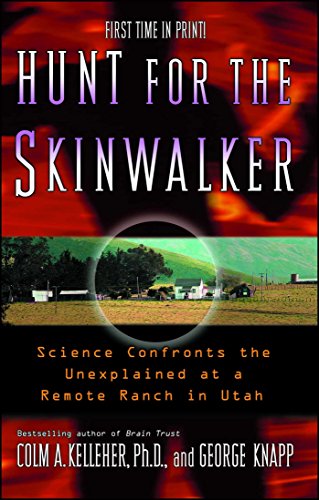
- Follow the ranch investigation in a full-length account coauthored by George Knapp
- Explore the reported events behind one of UFO culture's most discussed locations
- Compare the investigators' interpretations with the claims covered in the article
The difficulty was turning those experiences into evidence that other researchers could examine and verify. No publicly available NIDS result established an extraterrestrial or paranormal cause.
Researcher Colm Kelleher and journalist George Knapp described the investigation in Hunt for the Skinwalker. The book brought the team’s accounts to readers beyond the institute.
Bigelow sold the property in 2016. A television series followed under new ownership, giving the ranch a much larger audience.
BAASS and the Government-Funded AAWSAP Program
Bigelow’s UFO research eventually became connected to a program managed by the Defense Intelligence Agency, or DIA.
The Advanced Aerospace Weapon System Applications Program, or AAWSAP, funded studies of possible future aerospace technologies. The contract went to Bigelow Aerospace Advanced Space Studies, known as BAASS.
Government briefing records date the award to September 2008. They describe $10 million in initial funding and another $12 million allocated for fiscal year 2010.
The technical work covered subjects such as propulsion, lift, materials, and ways to make aircraft harder to detect. The wider investigations also included UFO cases and reported paranormal activity at Bigelow’s Utah property.
According to the Pentagon’s 2024 historical review, the DIA program manager supported UFO investigations, although the contract did not specify them. The review says DIA had not specifically authorized the paranormal work.
AAWSAP and AATIP Are Not Exactly the Same Thing
Accounts of Bigelow’s government work often use another name: the Advanced Aerospace Threat Identification Program, or AATIP. The two names appeared interchangeably even in official documents.
The 2009 briefing records show Senator Harry Reid’s office using AATIP for AAWSAP. Readers can therefore encounter either name in discussions of the same contract.
The Pentagon’s All-domain Anomaly Resolution Office, or AARO, draws a further distinction in its 2024 review. It describes later AATIP activity as informal research into military sightings, without dedicated funding or staff.

- Follow James Fox into the clash between UFO witnesses, lawmakers, and claims of deeply guarded information.
- Go beyond the hearing clips to explore why access, testimony, and accountability have become part of the mystery.
- A natural next watch when a disclosure headline leaves you asking who knows more than they can say.
What Did AAWSAP Produce?
AAWSAP produced studies of advanced aerospace concepts. By July 31, 2009, DIA had received 26 technical papers, according to its briefing records.
Those papers explored possible technologies; they were not demonstrations of working spacecraft. AARO’s later review says they were not thoroughly peer reviewed and dates AAWSAP’s end to 2012.
Supporters proposed a Department of Homeland Security follow-on called KONA BLUE, anticipating access to alleged off-world material. AARO says it was never established or funded and received no such material.
Did Bigelow’s Research Prove UFOs Are Alien?
Bigelow’s projects have not publicly established that aliens are visiting Earth. The institutes, contracts, and investigations are documented, but their existence does not confirm the extraordinary claims they examined.
In its 2024 review, AARO reported finding no verifiable evidence that government agencies or private companies possessed or reverse-engineered extraterrestrial technology.
That finding does not explain every reported encounter. It does mean that Bigelow’s personal conviction remains separate from a publicly verified discovery.
His Search Expanded Beyond UFOs
Bigelow’s interest in unexplained phenomena eventually moved beyond unidentified craft.
In April 2020, he founded the Bigelow Institute for Consciousness Studies. Its stated purpose is to investigate whether human consciousness survives physical death.
The institute sponsored an essay competition and later research projects focused on survival after death.
The new institute continued a familiar pattern in his work: funding researchers to examine experiences that remain difficult to explain. This time, the central question concerned what happens after death.
Why Robert Bigelow Still Matters to UFO History
Robert Bigelow gave UFO research money, personnel, equipment, and a connection to government-funded studies. He helped bring scientists, private investigators, aerospace researchers, and political supporters into the same projects.
His teams could investigate cases, interview witnesses, and spend years studying a single location. Few individual UFO researchers had the resources to work on that scale.
Bigelow’s place in this history rests on those sustained efforts. He made it possible to pursue unusual reports long after the initial attention had faded, even when clear answers remained out of reach.
Sources and Further Reading
- NASA: Bigelow Expandable Activity Module
- Bigelow Aerospace: Genesis Program
- Department of Defense: AARO Historical Record Report, Volume 1
- Bigelow Institute for Consciousness Studies: About BICS
BAASS and AAWSAP: The $22 Million Contract Behind the Pentagon’s UFO Program
George Knapp: UFO Reporter, Bob Lazar, Area 51, and Skinwalker Ranch