

Men in Black: The Strangers Who Show Up After a UFO Sighting
- Who Are the Men in Black Supposed to Be?
- The First Warning: Maury Island, 1947
- Albert Bender and the Saucer Club That Went Quiet
- How Gray Barker Turned a Rumor Into a Legend
- Was Some of It Made Up?
- When Did the Visitors Get So Weird?
- Did Real Officials Interview UFO Witnesses?
- How Did the Movies Change the Image?
- So Who Were the Men in Black?
Seeing a UFO is one thing. Having a stranger show up afterward to tell you to keep quiet is a whole different problem.
They wear dark suits, they know things they shouldn't, and they're not dropping by for a friendly chat.
That's the Men in Black legend, and it was around long before Hollywood gave the visitors gadgets and punch lines.
So where did they come from? And why did some of them seem to struggle with the basics of acting human?
The answer starts on a boat in 1947, but first it helps to pin down what a Man in Black is supposed to be.
Who Are the Men in Black Supposed to Be?
In UFO lore, Men in Black are mysterious visitors who turn up after a sighting and discourage witnesses or researchers from talking about it.
Some accounts describe them as government officials. Others suggest something only pretending to be an official, which is a far creepier idea.
The dark suit does a lot of the work. It says "authority" without telling you who the wearer actually answers to.
That's the whole appeal of the legend: the sighting ends, but apparently somebody else has been paying attention.
To see how it started, you have to go back to a boat off the coast of Washington in 1947.
The First Warning: Maury Island, 1947
The earliest version of the pattern comes from the disputed Maury Island story. In June 1947, a man named Harold Dahl said he'd seen strange objects over Puget Sound while out on the water.
According to Dahl, a visitor in a dark suit turned up the next morning and warned him not to discuss what he'd seen.
It was a busy month for the skies. Kenneth Arnold's famous "flying saucer" sighting and the Roswell incident both followed within weeks.
Nobody has ever verified Dahl's visitor, let alone identified him. But the shape of the story stuck: something strange happens in the sky, then an unwelcome guest arrives on the ground.
Five years later, that shape found its most famous victim: a flying-saucer enthusiast from Connecticut named Albert Bender.
Albert Bender and the Saucer Club That Went Quiet
In 1952, Bender founded the International Flying Saucer Bureau, an early civilian UFO group, and published a newsletter called Space Review.
For a year, business was booming. Members traded sightings, and Bender hinted that he was closing in on the truth behind the saucers.
Then, in 1953, he abruptly shut the whole thing down.
Accounts linked his exit to a visit from three mysterious men who warned him off. The guy organizing the search for answers suddenly had a reason to stop looking.
You can see why other UFO writers found that irresistible. Silence from the man with the newsletter left a very tempting gap for a story.
Bender eventually filled it himself. His 1962 book Flying Saucers and the Three Men gave a far more elaborate account, but it came nine years after the closure, so not everything in it was known back in 1953.
By then, a fellow member of his bureau had already turned Bender's silence into a legend. His name was Gray Barker.
How Gray Barker Turned a Rumor Into a Legend
Barker wasn't ready to let the mystery go. In 1956 he published They Knew Too Much About Flying Saucers, a title that made UFO research sound like a dangerous hobby.
The book tied Bender's story to a much bigger idea: UFO investigators were discovering things that someone wanted hidden.
Barker's world ran on letters, newsletters, small presses and swapped reports. The Gray Barker collection at Waldomore preserves that correspondence, and it lets you watch a story travel from one typewriter to the next.
That matters, because a story you've read three times isn't necessarily three stories. The same account could bounce between publications and start to look like a crowd of witnesses.
And at least one of Barker's contributors later admitted the crowd was partly invented.
Was Some of It Made Up?
In a 1998 essay titled "Gray Barker: My Friend, the Myth-Maker," writer John C. Sherwood described his own part in a fabricated story published under the pseudonym Dr. Richard H. Pratt.
That's a confession from the inside. It means the Pratt material can't be counted as one more independent witness.
It doesn't explain every Men in Black case. It does explain why more versions of a story aren't always more evidence for it.
Some of the visitors, in other words, walked into UFO history straight off a printing press. The next batch walked in from somewhere much stranger.
When Did the Visitors Get So Weird?
By the 1960s and 70s, the Men in Black had changed. Accounts collected by writer John Keel described visitors with odd speech, stiff movements and questions that suggested they didn't quite understand everyday life.
Picture an "official" who can't quite manage small talk or a handshake. That's a different kind of unsettling from someone flashing credentials.
It also connects these stories to something much older: tales of unfamiliar beings slipping into the human world. Researcher Jacques Vallée spent a career tracing those patterns across folklore and UFO reports.
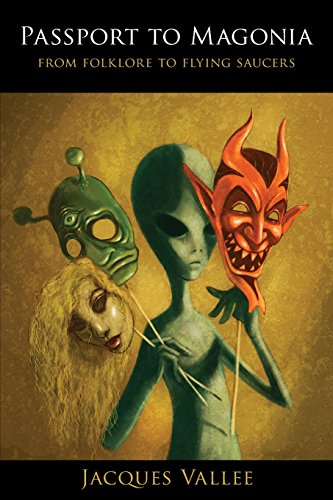
- Explore parallels between older folklore and modern UFO encounter accounts
- Read Jacques Vallee's influential approach to the history of contact stories
- Compare reports across eras instead of treating every case in isolation
The legend became flexible enough to hold both ideas at once. One account hints at government secrecy, while the next hints at something only pretending to have a government behind it.
Which raises an obvious question: did real officials ever knock on witnesses' doors?
Did Real Officials Interview UFO Witnesses?
Yes, and there's a paper trail. The National Archives' Project Blue Book guide leads into the U.S. Air Force's own UFO case files.

- Follow James Fox into the clash between UFO witnesses, lawmakers, and claims of deeply guarded information.
- Go beyond the hearing clips to explore why access, testimony, and accountability have become part of the mystery.
- A natural next watch when a disclosure headline leaves you asking who knows more than they can say.
Those files have names, dates, letters and organizations you can look up. That's what makes them different from a visitor whose only credential was a dark suit.
Real classified work is also why the legend feels plausible. If the government really did investigate UFOs, a mysterious government visitor doesn't sound so far-fetched.
The catch is that a plausible setting doesn't identify anyone. An unknown man in a suit might be an official, an impersonator, or a detail that grew in the retelling.
How Did the Movies Change the Image?
Then Hollywood came along and gave the whole thing a uniform. The 1997 film Men in Black turned the visitors into a slick alien-monitoring agency with matching suits, clever gadgets and punch lines.
It's easy to carry that polished image back into the older stories. Suddenly every vaguely described stranger looks like a competent agent with a boss to report to.
The original visitors were much messier. No clear organization, no consistent purpose, and sometimes no convincing grasp of how humans behave.
Honestly, that's what makes them more fun.
So Who Were the Men in Black?
There's no single organization that explains every report. What there is, is a great story that grew in layers: a 1947 warning, a saucer club that went quiet, a friend with a printing press, a few admitted inventions, and some very odd visitors.
If you want to follow it yourself, start with Bender. Compare what he said in 1953 with the book he wrote in 1962, and you can watch the legend take shape in real time.
The suits are the easy part to recognize. The real puzzle is how so many different strangers ended up working for the same imaginary employer.
Roswell UFO Incident: Crash, Cover-Up, and Alien Legend
Famous Ufologists: The 30 Scientists, Reporters and Contactees Worth Knowing