Jeremy Corbell Movies: Five UFO Documentaries and How to Pick Your First
- Which Films Are in the Lineup?
- Patient Seventeen: Start With One Puzzling Object
- Hunt for the Skinwalker: Give the Mystery More Room
- Bob Lazar: Area 51 & Flying Saucers: Follow the Man Behind the Claim
- Immaculate Deception: Step Into John Lear's World
- Sleeping Dog: Turn the Camera on Corbell
- What Should You Watch First?
Jeremy Corbell's documentaries come with a built-in dilemma: do you want one mysterious object, one very strange ranch, or one man who says he worked on flying saucers?
There's also a project about a former CIA pilot with a theory for every occasion, and a brand-new film that turns the camera on Corbell himself.
Corbell, if you're new to him, is an artist turned investigative filmmaker whose motto is "weaponize your curiosity," and his films do exactly that.
The subjects are so different that choosing by topic beats treating every title as the same kind of UFO film.
Here's the short version: pick the mystery, then pick the movie.
Everything below comes from the official pages and credits, so you'll know exactly what you're pressing play on; our Jeremy Corbell profile covers the man himself. Here's the lineup.
Which Films Are in the Lineup?
The project and viewing details below reflect the official pages as checked in September 2026. Access varies by country, and Corbell's role isn't the same in every title.
| Film | Year or Status | Corbell's Role | What Draws You In |
|---|---|---|---|
| Patient Seventeen | 2017 | Director | An object described as a possible alien implant. |
| Hunt for the Skinwalker | 2018 | Director | A ranch with several kinds of unusual report. |
| Bob Lazar: Area 51 & Flying Saucers | 2018 | Director | A man who says he worked on recovered craft. |
| Immaculate Deception | Film and episodic project | Director | John Lear's extraordinary beliefs. |
| Sleeping Dog | 2026 | Documentary subject | Corbell's own reporting career. |
One honest note before we start: this guide draws on official descriptions and credits, not firsthand reviews of each film. Let's take the titles in order of scale, starting with something small enough to fit in a specimen jar.
Patient Seventeen: Start With One Puzzling Object
Roger Leir was a Southern California podiatric surgeon who, from the mid-1990s, made a second career of removing small objects from people who believed they'd been abducted. He said the objects were alien implants; skeptics said they looked like ordinary bits of glass or metal.
Patient Seventeen picks up that work. It follows an object removed from a man's leg and the effort to find out what it is, and Corbell's official film page sums up the premise as meeting "a surgeon who claims to remove highly advanced implants."
The same page promises a team "armed with a patient, a scalpel, black lights and a stud finder." Subtle, it is not.
At 70 minutes it's the shortest film here, and the most focused. If you like a mystery with one physical thing at its center, the questions all follow that object: its removal, its handling and its analysis.
The page also posts material from the lab work, and Corbell's October 2017 production post gives the release context. Leir himself died in 2014, three years before the film came out.
The interesting question is what an examination can really tell you. An unusual result would still need a further explanation before it became evidence of an extraterrestrial implant.
If one object feels too small, the next film hands you an entire ranch.
Hunt for the Skinwalker: Give the Mystery More Room
Skinwalker Ranch sits in Utah's Uintah Basin, and in 1996 it was bought by Robert Bigelow, the Las Vegas businessman whose National Institute for Discovery Science then spent years studying it. Biochemist Colm Kelleher led that team, and Las Vegas reporter George Knapp wrote up the study with him in their 2005 book Hunt for the Skinwalker.
That book is the source for Corbell's 2018 film. Its official film page calls the ranch work "the most extensive scientific study of a paranormal hotspot in human history," which is quite a claim for a cattle property.
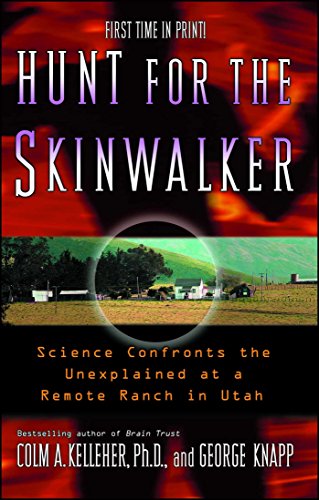
- Follow the ranch investigation in a full-length account coauthored by George Knapp
- Explore the reported events behind one of UFO culture's most discussed locations
- Compare the investigators' interpretations with the claims covered in the article
Reported lights, unusual animals, livestock incidents and the attempts to investigate them give the film a much broader scope than Patient Seventeen. Here the draw is a location where several kinds of strange account have piled up.
It runs a little over two hours, and the Apple TV listing notes that Corbell interviewed eyewitnesses, including the ranch's new owner, and turned up previously unreleased recordings.
Choose this one if you're curious about the ranch and the possibility that its different reports connect. If the organizations start to blur together, our BAASS and AAWSAP guide explains the later government-funded work within the wider history.
The ranch story runs through George Knapp. So does the next one, which began on a Las Vegas newscast in 1989.
Bob Lazar: Area 51 & Flying Saucers: Follow the Man Behind the Claim
In May 1989, Knapp's station, KLAS-TV, aired an interview with a man who said he'd worked on recovered craft at a site called S-4 near Area 51, with an assignment focused on propulsion. By that November the man had a name, Bob Lazar, and UFO culture had a new favorite insider.
Corbell's 2018 documentary returns to the story three decades later. Its official film page promises previously unreleased footage, and the film gives the alleged technology a personal center: the man whose descriptions made S-4 and its craft so familiar.

- Read Bob Lazar's account of S-4 and his alleged work on unusual propulsion
- Go beyond interview clips with a book-length version of his story
- Compare the memoir with reporting, disputed details, and later retellings
It runs 97 minutes, and that page includes credits, supporting interviews and a viewing link. If a short Lazar clip left you wanting the longer account, this is the title to look up.
The claimed workplace remains unverified. Our Lazar article covers that background, and the element 115 comparison explains why the later discovery of a real element doesn't settle the propulsion claim.
Lazar's story reached the world through a television reporter. The next subject has never needed anyone's help getting attention.
Immaculate Deception: Step Into John Lear's World
John Lear is introduced on the official Immaculate Deception page as the "Godfather of Conspiracy," a former CIA pilot and the disinherited heir to the Lear Jet aviation empire. Supporters, the page says, hail him as "a courageous prophet of truth," while critics dismiss him as "a charlatan and a kook."
The project centers on Lear's beliefs about UFOs and what he thinks is being concealed. Corbell is credited as director, producer and cinematographer.
This one needs a small note about format. The page describes both feature and episodic material, lists the runtime as still to be announced, and offers episode one to watch for free.
So follow what's actually available on the project page, rather than assuming you're opening a conventional feature with a settled release year.
Lear's worldview is the main attraction here. It's the choice for readers interested in a person and the reach of his claims, rather than one narrowly defined incident.
By now you may be as curious about the man asking the questions as about his subjects. Somebody else was too.
Sleeping Dog: Turn the Camera on Corbell
Sleeping Dog is the 2026 documentary in which Corbell is the subject rather than the director. Distributor Falcon Scout Media names Michael Lazovsky as its director and describes the film as following Corbell's path from mixed martial artist to a central figure in the push for UAP disclosure.
The official movie site calls it "an unprecedented documentary following investigative journalist Jeremy Corbell as he steps into a high-stakes fight to uncover the truth about UAPs." The Apple TV page lists a 98-minute runtime and is the place to check viewing access.
Choose it if the reporting career behind the other projects is what you want to follow. It changes the question from what Corbell is investigating to how he became the person doing the investigating.

- Explore UFO belief through the perspective of religious-studies scholar D. W. Pasulka
- Consider how technology and popular culture shape modern ideas about contact
- Add cultural context to stories that connect aliens with spiritual experience
So which one do you queue up tonight?
What Should You Watch First?
Start with the premise you already want to know more about:
- One object: Patient Seventeen gives you the implant and the lab results.
- One place: Hunt for the Skinwalker gives you the ranch and its pile-up of reports.
- One insider: Bob Lazar: Area 51 & Flying Saucers gives you the most influential first-person account in modern UFO lore.
- One believer: Immaculate Deception gives you John Lear and the full reach of his claims.
- One filmmaker: Sleeping Dog gives you Corbell himself.
If people interest you more than incidents, Lear's project and Sleeping Dog point in two different directions. There's no need to force them into a single viewing order.
For the conversations that continue between film projects, our Knapp and WEAPONIZED updates give you dated starting points. Pick the mystery, press play, and follow whichever story is still on your mind after the credits roll.
Jeremy Corbell: UFO Filmmaker, Bob Lazar, Skinwalker Ranch, and UAP Leaks
Bob Lazar and Area 51: The Man Who Says He Worked on Nine Flying Saucers